
War on terrorism versus civil liberties of individuals: An analysis of the Malaysian Security Offences (Special Measures) Act 2012
This article, written during the author’s internship with the Malaysian Human Rights Commission, presents an analysis of the Malaysian “Special Measures” Act (2012), which compromises the civil liberties of individuals, through such powers as identifying anonymous authors on the Internet and intercepting personal communications, in an effort to ensure the security of the state against terrorist acts.
Challenges and prospects of AU to implement the Ezulwini Consensus: The case of collective security and the use of force
The “Ezulwini Consensus” has endorsed the Responsibility to protect (R2P) that recognizes the “right to intervene when a State is unwilling or unable to protect its populations” from genocide, war crimes, ethnic cleansing and crimes against humanity. In such situations, the Ezulwini Consensus emphasizes that regional organizations in areas of proximity to conflicts should be empowered to take action. However, the conflict situation in the Eastern DRC has challenged the ICGLR to implement the Ezulwini Consensus. The ICGLR was unable to take appropriate action against Member States who were providing support to armed groups destabilizing other Member States. In order to protect the population under imminent threat and maintain the Great Lakes Region as a specific zone of reconstruction and development, Member States of the ICGLR could demonstrate their political will to respect the fundamental principles particularly of the territorial integrity, national sovereignty, non-interference and non-aggression against another Member State. Besides, the AU could have taken its own responsibility by sending African Experts in order to help the ICGLR to resolve the crisis as the mediator between the Government of the DRC and M23 was no longer neutral.
This paper was presented at the South African Association of Political Studies (SAAPS) 2013 Regional Colloquium on “The African Union: Quo Vadis – the next 50 years” at the University of South Africa on 4 October 2013.
Afghanistan after the US withdrawl
This paper analyses the role of Afghanistan’s regional neighbours in securing it’s recovery and stability, as well as the wider implications of America’s strategic policies in the region. Will things fall apart or hold together in Afghanistan after December 2014?
Water Security in the Sixaola River Basin
The Sixaola River Basin crosses the border between Costa Rica and Panama, and is home to Yorkín and Bribrí communities, raising legal and social challenges for equitable and secure water management. This paper outlines some of these challenges and makes recommendations for reducing human vulnerability to hazards (particularly floods) and for improving relationships among stakeholders.
ASEAN Vision: Peace or Conflict?
Kyi Kyi Seinn discusses ASEAN Vision 2020, and looks beneath the rhetoric of peace and harmony to reveal the tensions of economic exploitation and international migration. She argues that the significant power imbalances between the original ASEAN 6 countries and the newer, less developed member states (Cambodia, Malaysia, Indonesia, Thailand, and the Philippines) have not been adequately addressed in the plans of economic cooperation.
Key words: regional integration, economic exploitation, migration, displacement, ASEAN Vision 2020, CLMV countries, AFTA, CEPT, ASC, AEC
Europe’s second conquest of Latin America
With a view to promoting public discussion and debate about these agreements, we present here an analysis of the implications and scope of some of those that have already been signed. We also analyse the implications of some European Union documents, published over the last two years, that set out the EU’s strategy and intentions in the negotiations.
The UN’s Intellectual Challenge Today
The future is here, the world is changing, and the United Nations must as well. In view of that, the United Nations Intellectual History Project (UNIHP) nears completion. It identifies three types of challenges for the UN: Intellectual, participatory, and personnel. Louis Emmerij, co-director of the UNIHP, brings us this synopsis of the project and what it means for the UN.
Violence and Poverty Entangled in El Salvador
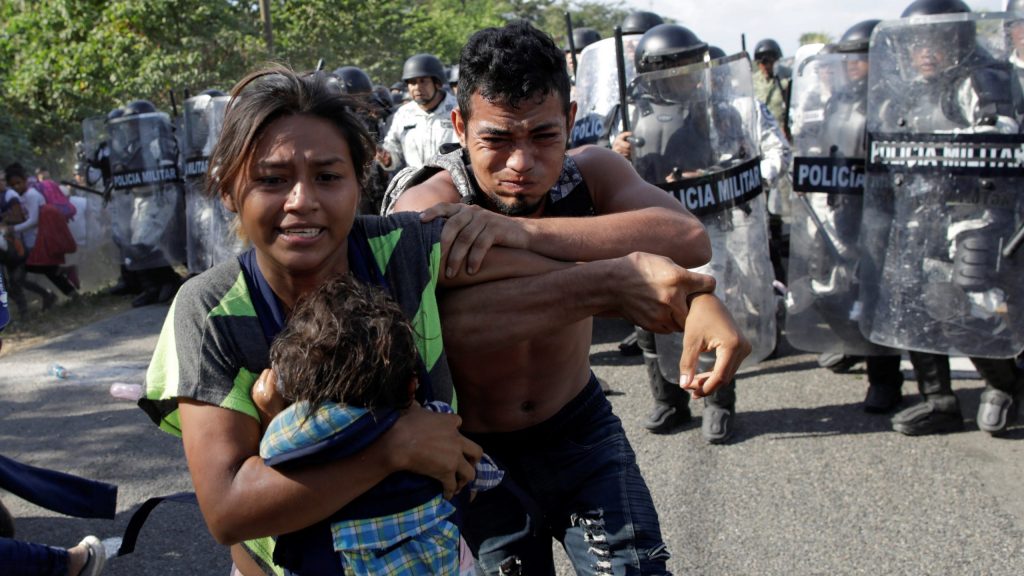
In the first of a two-part series, researcher Paula LeRoy discusses several ways in which poverty and violence interact in El Salvador. Of particular emphasis in this analysis is the inadequate fulfilment of the 1992 Peace Accords. The companion article (forthcoming) will assess the viability of potential responses to the issues discussed here.
Transitional Justice in Burundi: Expectations and Concerns
Vital Nshimirimana discusses the transitional justice process as planned by the government of Burundi for 2012. He argues that issues including ongoing insecurity, human rights abuses, lack of dialogue and trust among social partners, as well as lack of rule of law will undermine the process.
Can the European Union be a peace-maker in the world? In Kosovo?
Jan Oberg discusses the legality of Kosovo’s declaration of independence, the dangers of an increasingly militant and tactless EU foreign policy, and the continued need for creative thinking and enlightened policy reform.