
Iran and the Centrality of the IAEA
Iran and the Centrality of the IAEA Author: Dr. Aldo Zammit Borda Originally published at Peace and Conflict Monitor on 03/15/2005 Introduction In February 2005, Iran rejected an EU-3(1) offer that would have limited its nuclear capabilities, to replace its heavy-water nuclear reactor with a lightwater reactor2. This offer was made as part of the […]
Towards Conflict Transformation in Nepal: A Case For UN Mediation
UN peace facilitators could help the Nepalese to draw up a viable compromise, perhaps engaging the parties and the civil society in “constitution making” as itself a part of the process of conflict transformation. They could help overcome the problems of mutual distrust, and ensure transparency and compliance with the code of conduct. UN resident coordinator in Nepal, Matthgew Kahane, has said that UN help could build trust in both sides to facilitate the resumption of the peace negotiations. Unfortunately, the government of Nepal can veto UN mediation because the UN can only intervene if it has the consent of all parties.
Violent or Non-violent Solutions? The Child Soldiers of Northern Uganda
Ask the question can von-violent methods help to end the war that has lasted seventeen years in northern Uganda destroying the lives of thousands of children and young people. She notes that progress has been slow but that is no excuse for stopping. Quite the opposite, and one way of moving forward is to shout as loudly as possible. The Peace and Conflict Monitor is helping. Join in the cacophony.
Where do ideas come from? An Intellectual History of the United Nations
As lifelong participants and observers of multilateral development work and diplomacy, it struck Dr.Emmerij and his collaborators for some time that the UN story deserves to be better documented if it is to be better understood and appreciated. This article examines the importance of the history of ideas in relation to the United Nations, its formation and its major contribution to world peace and well-being.
The Day War Broke Out
News editor, Joseph Schumacher, checks the editorials around the world on THE DAY WAR BROKE OUT.
Under the Guise of Protecting Human Rights and Establishing Democracy: US Intervention in Sri Lanka
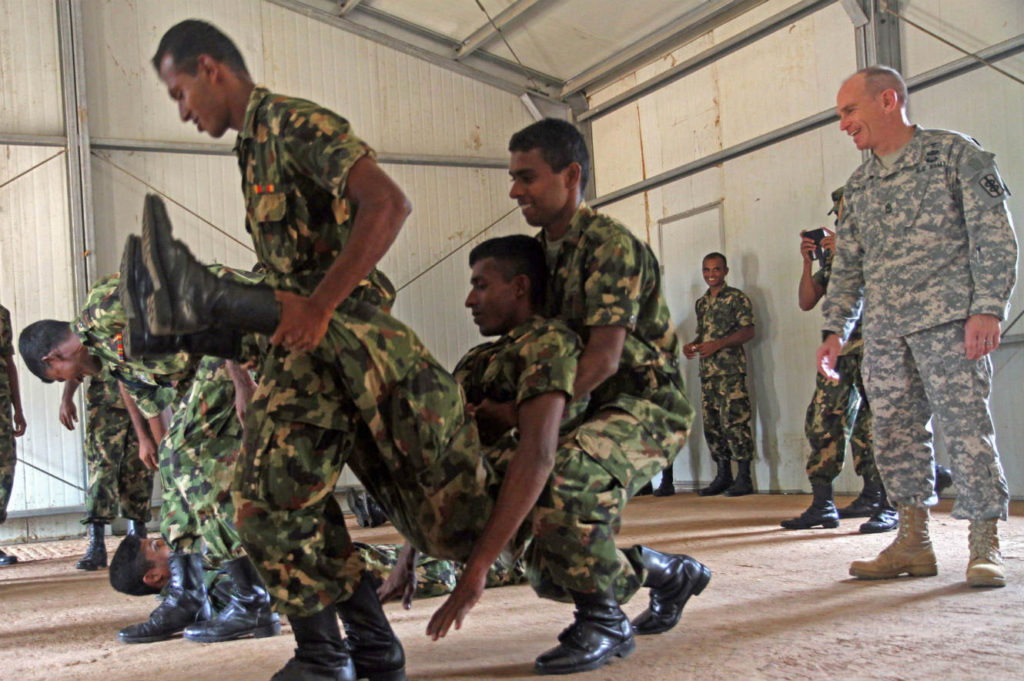
The paper argues that strong US intervention in Sri Lanka after the end of the island’s armed conflict in 2009 is not based on altruistic efforts to protect human rights as presented in mainstream sources, but stems from deepening US geopolitical and ideological interests in the Indian Ocean region. Keywords: Sri Lanka-US relations, US foreign policy, North-South relations, Neoliberal policy, interventionism, Indian Ocean, US-China relations