
The Need for Security Sector Reform in Afghanistan to Curb Corruption
This paper, on the basis of available literature and organizations’ experiences, aims to evaluate and analyze the institutional limitations and weaknesses of the police and judicial sector of Afghanistan’s security sector.
Understanding the trends and inadequate practices in the services delivery systems of the Afghan security sector will set the stage for possible policy recommendations to enhance the effectiveness of the sector and curb corruption. Subsequently, identification of effective and feasible policy recommendations to enhance the performance of the Afghan police and judicial sector will enable other service delivery institutions to resourcefully implement development initiatives.
The Rise of Al Jazeera
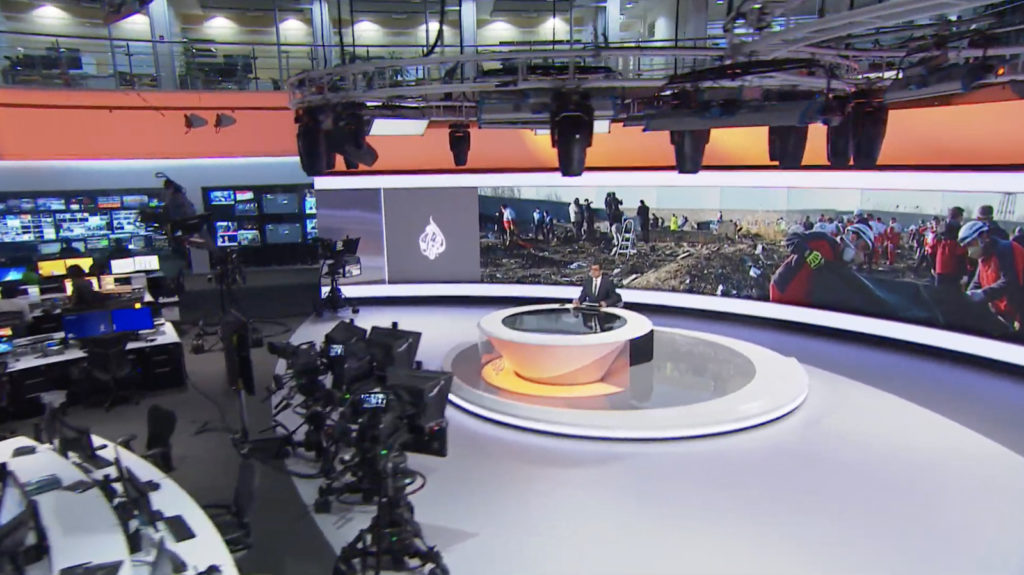
Al Jazeera is likely the most controversial media phenomenon of the last few decades. But say what you will about the goodness or badness of it, its effect is undeniable. Al Jazeera has done what no other media before it could: bring all Arabs together, under one umbrella, to speak their minds.
Switzerland’s “Minaret Conflict”
Switzerland’s “Minaret Conflict” Author: Lucy Dubochet Originally Published at Peace and Conflict Monitor on 10/06/2008 I. Description In 2006 and 2007 a few Muslim communities had requested building permits to add a minaret to their mosques. In many cases, although local administrations had considered that there was no legal basis to reject these demands, […]
Mantras and Maxims about Mabhouh: Analyzing An Information Overload
What is the real story behind Mahmoud Al-Mabhouh’s Dubai death? After understanding the Palestinian Question, Hamas and Mossad, this essay will tackle an information overload and analyze how Israel’s The Jerusalem Post, Dubai’s Khaleej Times and Britain’s The London Independent covered this James Bond style, January assassination. Who said what, how and why; terrorists and spies, accusations and blame, military shopping-sprees, involvement of outsiders and identity fraud.
Yasser Arafat: Around the World
The World debates Yasser Arafat’s Legacy and what his passing means for Middle East.
From http://news.bbc.co.uk/, http://www.aljazeera.com/, http://news.yahoo.com/,
http://www.foreignpolicy.com/, http://nobelprize.org/index.html, http://www.democracynow.org/index.pl, http://www.nytimes.com/
The Unraveled and Disquieting Human Rights Violation of Afghanistan
The issues of Human Rights violations have always been of grave concern to the Human Right Defenders. The cases of human right violations ignite fury and anguish and pose challenge for the world. This paper here forth brings forward the odious crime of ‘Bacha Bazi’, and explains how the organized crime takes place in the country, it reflects on the plight of the victim, questions the responsibility of the government to act and pushes for humanitarian intervention. It states that though the crime is restricted to one country but the onus of demolishing this traditional practice lies on the international community as a whole. The world should therefore come together and join hands to save the future of the Afghan Boys.
Keywords: Bacha Bazi, International Conventions, Human Rights, Young boys, Afghanistan, Sexual Slavery
Sudan: Another resource war?
The world’s attention was recently attracted to the Darfur region in the west of Sudan, where the conflict has escalated in recent weeks, fearing a second Rwanda might take place. An estimated 1,000 people per week are dying in the region.
Palestinian Suicide Bombers Revisited: A critique of current wisdom
A fundamental question has dominated the study of terrorism and suicide attacks. After the September 11 attacks, scholars have primarily relied on themes from neoclassical economics to develop theoretical and empirical models of terrorism. Suicide attackers and terrorist were seen as optimizing agents. But this innovative approach failed to deliver and obscured more than it illuminated. It failed to yield meaningful predictions and practical policy implications. This paper considers the merits of this approach and surveys evidence gathered from the biographical sketches of 50 Palestinian suicide attackers.
Thinking the Unthinkable
Thinking the Unthinkable Author: Fraser Gray Originally published at Peace and Conflict Monitor on 05/01/2006 Officially since 1967, and arguably before then, the US has considered Israel a key ally in the Middle East. As the primary, and by far the largest, recipient of US military aid and diplomatic support since that date, Israel has […]
The Mizrahi-Palestinian Connection, Part III
Scholarly analysis of the Israeli-Palestinian conflict has depicted it as a conflict between two homogenous entities, namely Israel and the Palestinians. However, scholars largely ignore the impact of the “inner-Israeli” conflict between Mizrahim and Ashkenazim on the “external” conflict between Israelis and Palestinians. Not only are the Mizrahim excluded from the peace process itself, but academics also fail to research the role they play in the conflict, while their occasional public role is that of extremely right-wing “Arab-haters” who prevent the Ashkenazi-dominated “liberal peace camp” from reaching a solution– hence they are portrayed as an obstacle to peace.