
Un análisis de la Guerra Fría entre Arabia Saudita e Irán
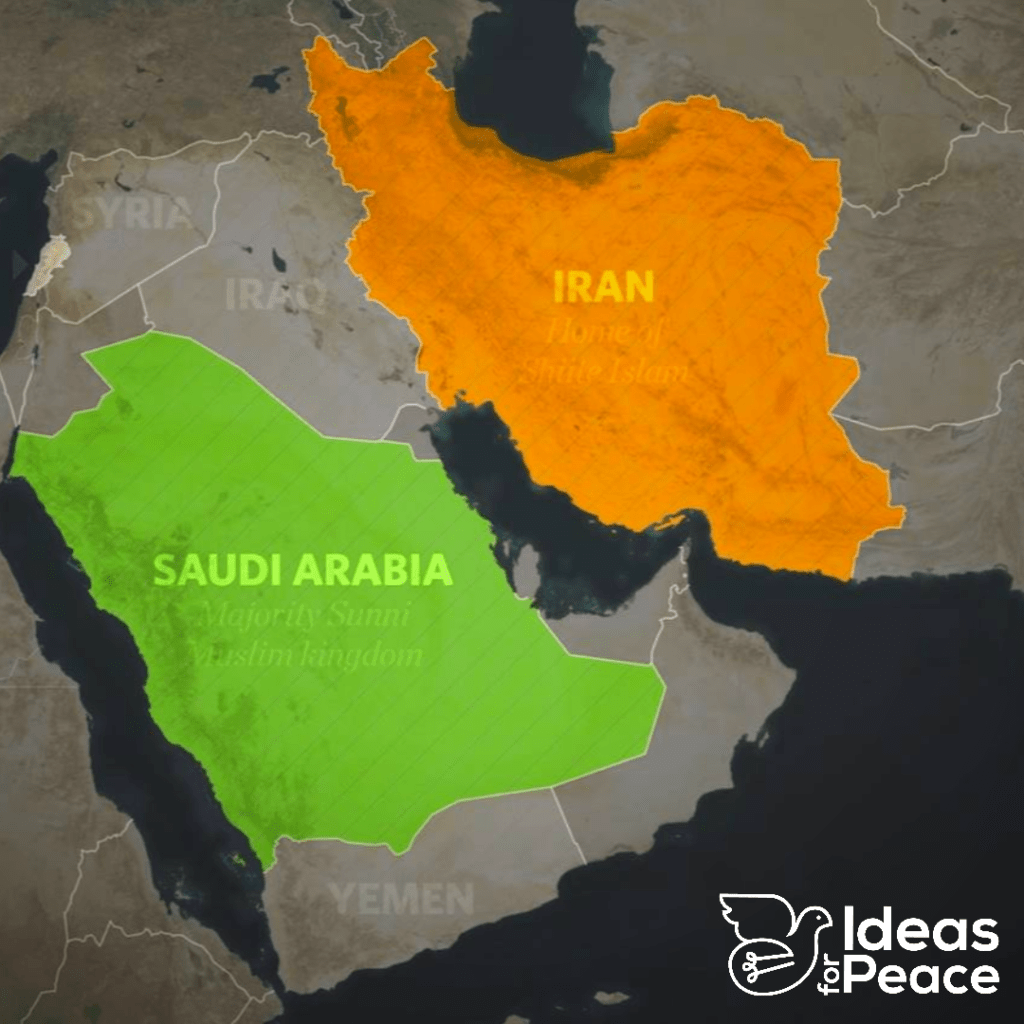
Este artículo de investigación presentará un trasfondo histórico y las perspectivas de ambos estados-nación involucrados en el conflicto; además, el investigador analizará el conflicto religioso entre los dos estados y sus roles en el conflicto alrededor del Golfo Pérsico y, finalmente, tratará de establecer si el conflicto entre las dos potencias islámicas hegemónicas equivale a una guerra fría.
Hawks v Reformists
Paul Berman, Terror and Liberalism, W.W.Norton, 2003 pp.214
ISBN 0-393-05775-5
Amin Saikal, Islam and the West: Conflict or Cooperation? Palgrave MacMillan, 2003 pp. 171 ISBN 1-4039-0358-1
India and the IAEA’s Iran Resolution
Faced with further breakdowns in negotiations with the Iranian government, the International Atomic Energy Agency recently passed a controversial resolution that could lead to the referal of Iran’s budding nuclear program to the UN Security Council. What’s more, in a surprising move, long-time friend India voted with the United States against Iran, even as an energy deal between the two is about to make their relationship even closer. What gives?
India’s Development Diplomacy: Re-Engaging Afghanistan
The present approach of engaging regional players in Afghanistan by the United States could be scuttled by the bargaining postures of Iran, Russia, Pakistan, India and China on various issues of mutual concern. Rather than overtly depending on United States for guiding India through its AfPak strategy, India needs to proactively engage regional players- Iran, Russia and China through pro-active diplomacy, which could lead to potential joint problem solving initiatives. Also Indian initiatives could help defining issues in Afghanistan more in terms of creating value and bringing stability and security for all the concerned state parties.
Oily Iraq
The elections in Iraq were widely hailed as a tentative success in an otherwise disastrous situation. But considering the history of foreign intervention in the Middle East when it comes to oil interests, perhaps this silver cloud has a dark lining.
Shifting Sands: Instability in Undefined Asia
Shifting Sands: Instability in Undefined Asia Author: Strategic Foresight Group Originally Published at Peace and Conflict Monitor on: 04/28/2003 Category: Special Report There are periods in history when the world changes. The Second World War from 1939 to 1945, and the end of Cold War and apartheid from 1989 to 1992 were the last two […]
Negotiation, not strikes, needed for Iran
Key Words: US, Iran, Conflict, Negotiation, Diplomacy, Oil, Nuclear, Non-Proliferation Treaty, Foreign Policy
Planned Attack on Iran: Bush Will Expand War Before Blair Resigns
Planned Attack on Iran: Bush Will Expand War Before Blair Resigns Author: Michael Carmichael Originally Published at Peace and Conflict Monitor on: 01/30/2007 Category: Special Report The Editor-in-Chief of the Arab Times reports that a “reliable source” in Washington has provided detailed information about the forthcoming US hard-power attack on Iran’s nuclear and oil industries. […]
No Nukes, No Proliferation
Nuclear weapons could not proliferate if they did not exist. Because they
do, they will. The policy implication of this logic is that the best guarantee
of nuclear nonproliferation is nuclear disarmament through a nuclear weapons
convention that bans the possession, acquisition, testing and use of nuclear weapons,
by everyone. This would solve the problem of nonproliferation as well as
disarmament. The focus on nonproliferation to the neglect of disarmament
ensures that we get neither. If we want nonproliferation, therefore, we must
prepare for disarmament.
Nukes Worldwide: Disarmament, Iran, and New Military Doctrines
Jayantha Dhanapala, former Under Secretary General for Disarmament Affairs of the United Nations, says that there is a need for political solutions to resolve the nuclear proliferation in recent times.
Dhanapala is now the Secretary General of the Secretariat for Coordination of the Peace Process in Sri Lanka. He has also served as a Commissioner in UNSCOM and the Head of the Special Group visiting the Presidential Sites in Iraq in addition to his duties as Under-Secretary General for Disarmament Affairs.
In 2006 he will likely be Asia’s candidate for the post of the United Nations Secretary General.
Dhanapala feels passionately about disarmament. He spoke to Ravi R. Prasad at his office in Colombo.