
Presentación del Centro Global de Innovación para la Paz y del libro “Innovación para la Paz”
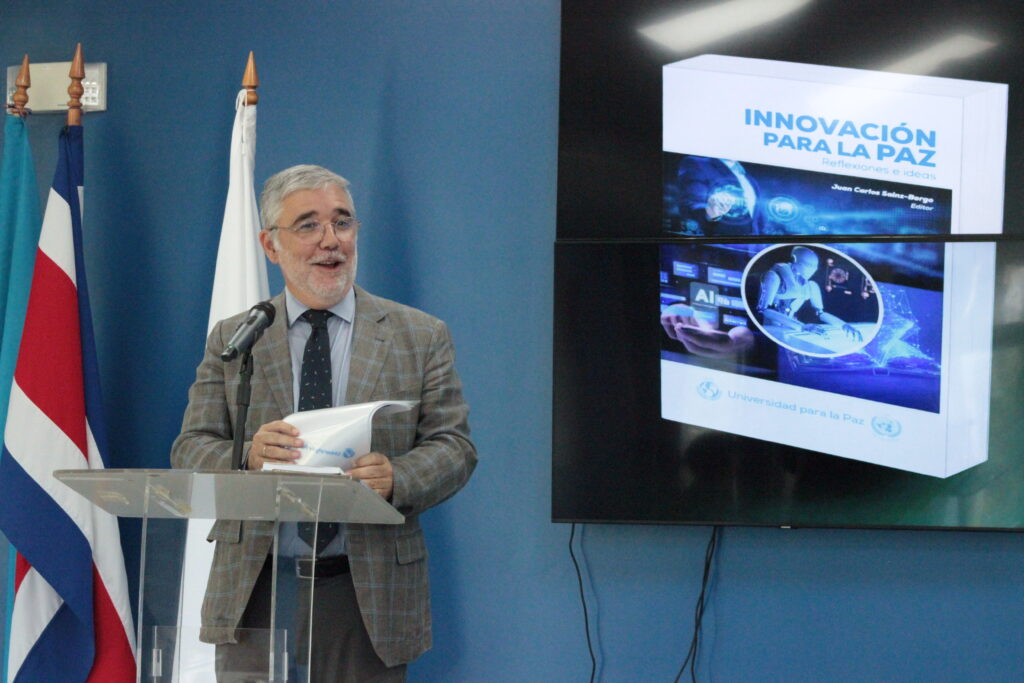
El 1 de abril, la Universidad para la Paz (UPAZ) celebró en su Aula Magna el evento “Innovación para la Paz”, orientado a reflexionar sobre cómo responder a las nuevas realidades en materia de paz mediante la colaboración interdisciplinaria. El Vicerrector, Dr. Juan Carlos Sainz-Borgo, presentó la visión del Centro Global de Innovación para la Paz, creado en 2022 para fomentar un mundo donde paz, innovación y sostenibilidad se sustenten en acción ética y cooperación intercultural. La actividad dio continuidad a los debates que inspiraron el libro Innovación para la Paz. Reflexiones e ideas, presentado en la ONU en 2024, y que en Costa Rica sirvió de base para mesas de discusión sobre áreas prioritarias de innovación (investigación constante, vínculo academia-empresa, capacitación tecnológica y políticas públicas innovadoras), formación de alianzas estratégicas con actores diversos, y exploración de fuentes de financiamiento nacionales e internacionales. Entre los proyectos replicables surgieron laboratorios de innovación tecnológica y programas de microcredenciales. El Rector, Dr. Francisco Rojas Aravena, cerró destacando la importancia de nuevas narrativas para la paz, el arte como medio de expresión pacífica y un desarrollo sostenible centrado en las comunidades.
Russian Invasion: Way ahead for a Bipolar Global Power Structure

Russian Invasion: Way ahead for a Bipolar Global Power Structure Author: Keshav Pandey The entire month of February 2022, in the landscape of International Relations was filled with disturbing news from the Eastern part of the European continent, when the Russian aggression was knocking at the doors of non-NATO Ukraine. The emphasis is put on […]
Prácticas restaurativas: el rol de la Comisión Internacional contra la Impunidad en Guatemala
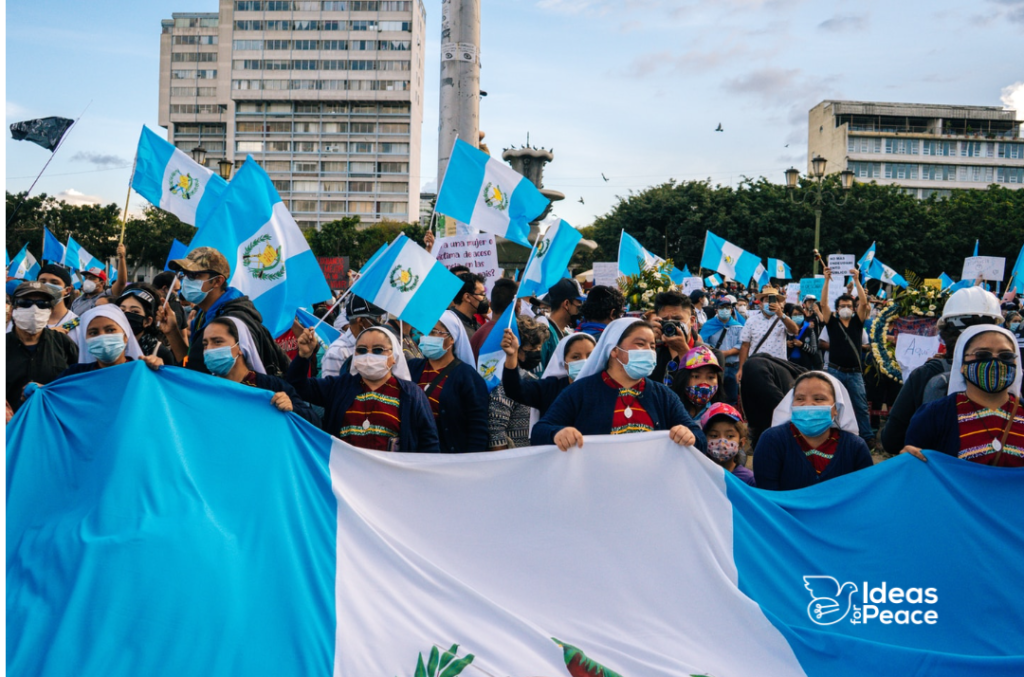
Prácticas restaurativas: el rol de la Comisión Internacional contra la Impunidad en Guatemala (CICIG) Autor: Mauricio Abraham Rosales Schettini Traducido al inglés por Leah Ann Durst-Lee Luego de un Conflicto Armado Interno (CAI) de 36 años (1960-1996) los acuerdos de paz en Guatemala supusieron la llegada de un nuevo capítulo en la reconstrucción de una […]
Interview with Pratyush Sharma
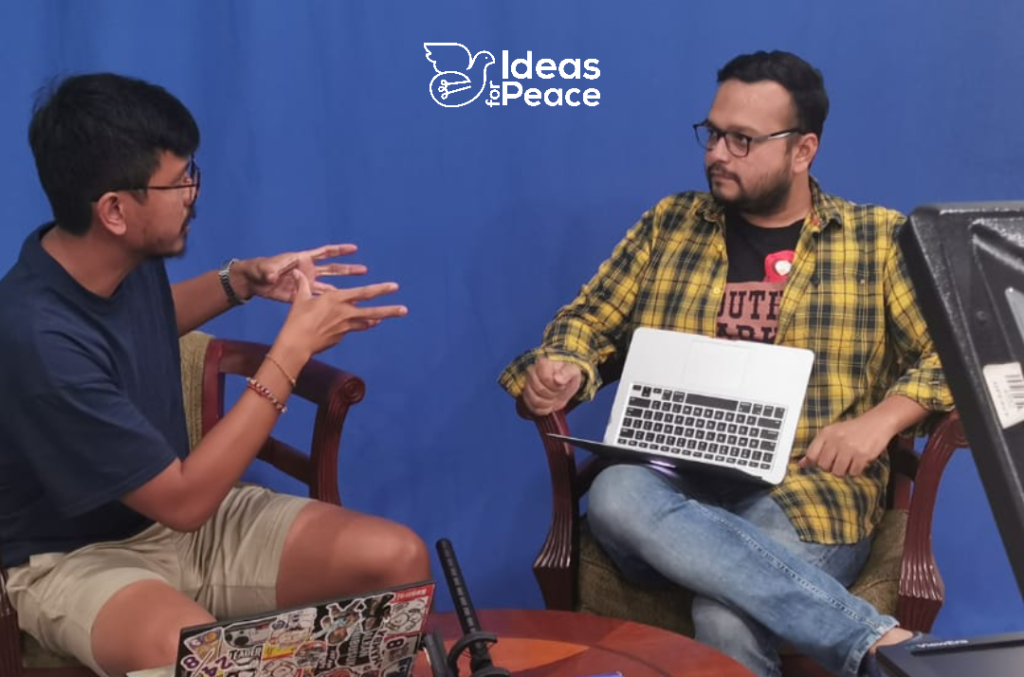
In this episode, Pratyush Sharma, UPEACE’s doctoral candidate, discusses his latest publication about South-South cooperation.
Serie Ideas para la Paz - El 75 aniversario de las Naciones Unidas
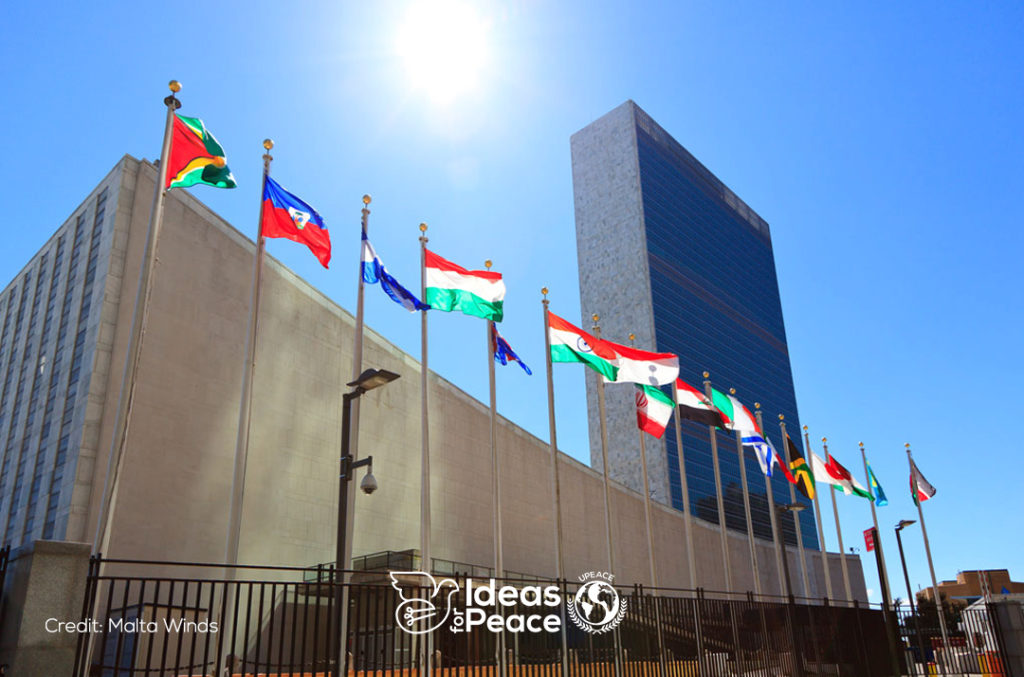
Francisco Rojas discute los desafíos que las Naciones Unidas enfrentan para alcanzar las metas establecidas en la Agenda 2030 y permanecer como el garante de la paz internacional
Those pesky moral standards
Those pesky moral standards Author: Biljana Vankovska Originally Published at Peace and Conflict Monitor on 07/12/2005 According to a wise man, morality consists of drawing a line at some point. Indeed, this is a personal attempt to talk publicly on drawing one particular line, i.e. to share with you my own moral dilemma which proved […]
Who benefits from global violence and war?
Key Words: capitalism, christian, corporations, foreign, fundamentalism, globalization, government, imperialism, killing, media
The Way Forward: justice, solidarity and cooperation
The Rector of the University for Peace lays out his views on the problems and possibilities for Peace, and ways of ending violent conflict. These views were delivered before an audience of some 500 people gathered in Nuremberg, Germany, on 1st May 2003. The governing authorities and the people of the historic City of Nuremberg are committed to spreading peace worldwide, and are responsible for a growing number of significant initiatives.
The Role of Regional Integration in Fighting Crime and Terrorism: The Case of the African Union’s (AU’s) Initiatives, 1999-2014
As regional organizations facilitate economic integration, they also find themselves increasingly taking responsibility for security issues as well. This paper outlines the experience of the Africa Union, and the challenges it faces as it emerges as a guarantor of security on the continent.
Water Security in the Sixaola River Basin
The Sixaola River Basin crosses the border between Costa Rica and Panama, and is home to Yorkín and Bribrí communities, raising legal and social challenges for equitable and secure water management. This paper outlines some of these challenges and makes recommendations for reducing human vulnerability to hazards (particularly floods) and for improving relationships among stakeholders.