
Managed Retreat or Forced Displacement? Conservation and Conflict in the Sundarbans

Managed Retreat or Forced Displacement? Conservation and Conflict in the Sundarbans Author: Sara-Duana Meyer The world’s largest riverine mangrove forest grows along the border of Southern West Bengal in India and Eastern Bangladesh. The Sundarbans,[1] literally beautiful forest, are of global importance as a natural carbon sink, a vital ecological buffer zone for the river […]
Interview with Pratyush Sharma
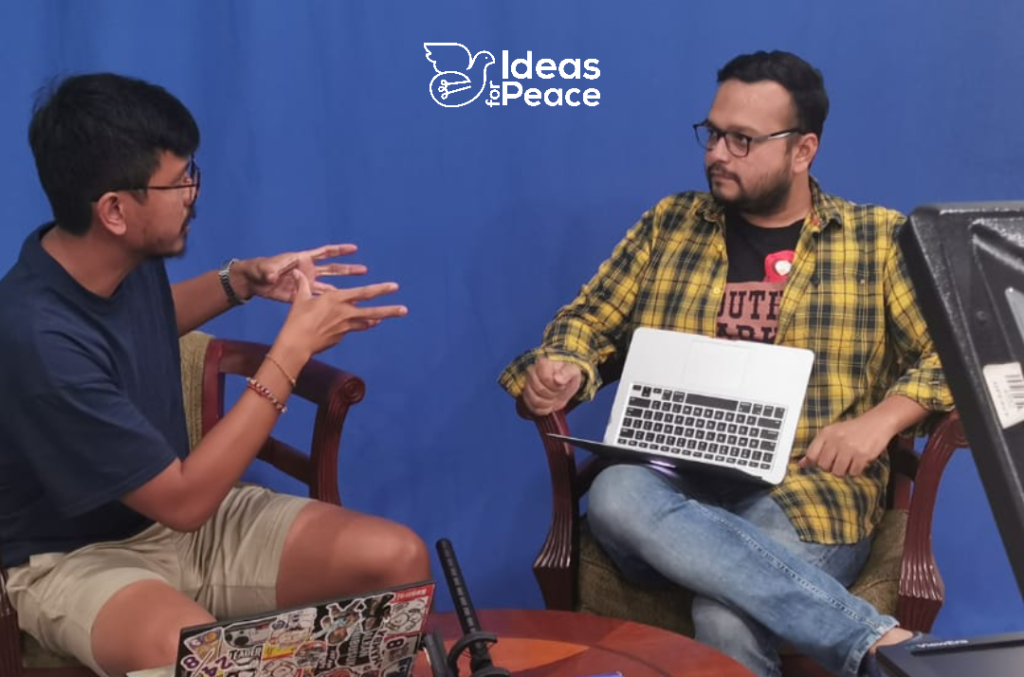
In this episode, Pratyush Sharma, UPEACE’s doctoral candidate, discusses his latest publication about South-South cooperation.
Selection of Poems from the ‘The Unfold Pinnacle’ – Part II

Selection of Poems from the ‘The Unfold Pinnacle’ – Part II Author: Basanta Kumar Kar Too Late This is the story about a seventeen years old malnourished tribal woman and a mother of a malnourished girl child from Tumrikasa, Manpur, Rajnandgaon, Chhattisgarh, India. Rajnandgaon, a district that host many political heavyweights is dominated by the […]
Auditorías sociales para revitalizar la gobernanza nutricional durante el COVID
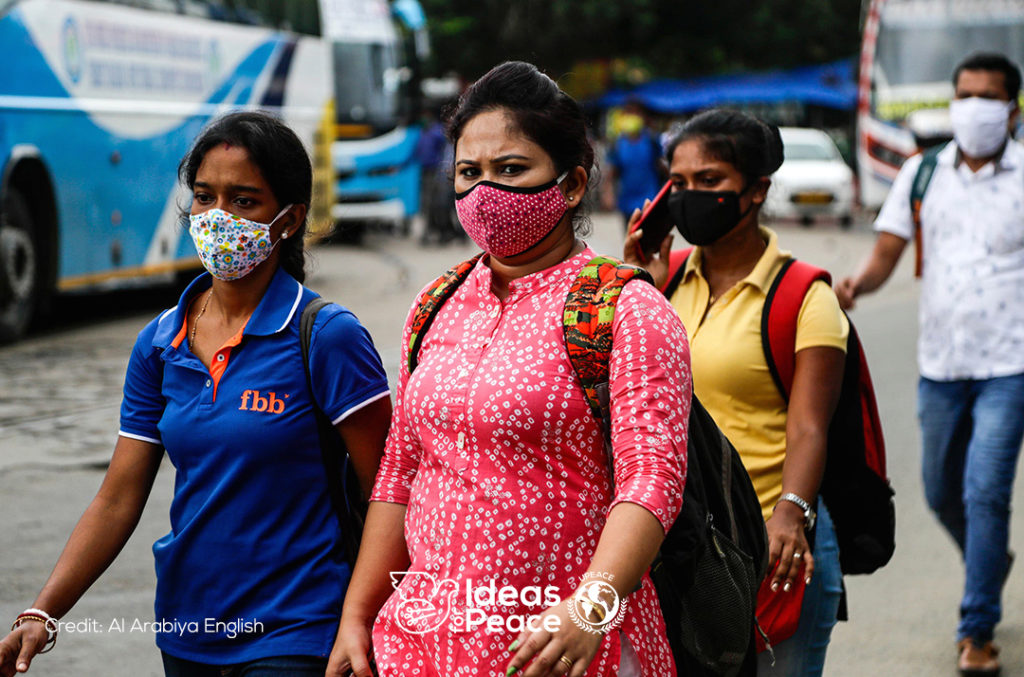
Las auditorías sociales aseguran la transparencia y aseguran el acceso a los recursos relacionados con la nutrición y la salud en India
RESPUESTAS RELIGIOSAS ANTE LAS PANDEMIAS

For this research, three pandemics Covid-19, The Black Death, and The Spanish Flu are studied to understand how religion has played a role during these pandemics.
Gandhi and the Impact of His Experiments
From a University for Peace course entitled “Peace and Non-Violent Transformation of Conflict,” this excerpt provides a basic introduction to Gandhi and his ideas. Gandhi never claimed to be infallible, and he viewed his ideas as experiments, not dogma.
Part of a course package produced by the Department for Gender and Peace Studies, the lectures of Prof. Mary E. King and others will be excerpted on this site in the coming months.
Gandhi and the Impact of his Experiments, part II
Gandhi and the Impact of his Experiments, part II Originally Published at Peace and Conflict Monitor on 05/12/2005 This excerpt is part two of a lecture from a University for Peace course entitled “Peace and Non-Violent Transformation of Conflict.” The lecture is an introduction to Gandhi and his ideas. To listen to part one, click […]
Cautious optimism best for India
The Kashmir bus service is a nice confidence building measure, but nothing more. India should remain cautious, as such signs of good will have, in the past, led to brutal conflicts.
India and the IAEA’s Iran Resolution
Faced with further breakdowns in negotiations with the Iranian government, the International Atomic Energy Agency recently passed a controversial resolution that could lead to the referal of Iran’s budding nuclear program to the UN Security Council. What’s more, in a surprising move, long-time friend India voted with the United States against Iran, even as an energy deal between the two is about to make their relationship even closer. What gives?
India’s Development Diplomacy: Re-Engaging Afghanistan
The present approach of engaging regional players in Afghanistan by the United States could be scuttled by the bargaining postures of Iran, Russia, Pakistan, India and China on various issues of mutual concern. Rather than overtly depending on United States for guiding India through its AfPak strategy, India needs to proactively engage regional players- Iran, Russia and China through pro-active diplomacy, which could lead to potential joint problem solving initiatives. Also Indian initiatives could help defining issues in Afghanistan more in terms of creating value and bringing stability and security for all the concerned state parties.