
On Violence: A Reappraisal of Hannah Arendt’s General Theory of Violence
On Violence: A Reappraisal of Hannah Arendt’s General Theory of Violence Author: Sean English Originally Published at Peace and Conflict Monitor on 03/16/2007 In relation to the justifications and rationalizations that are generally and normatively used to legitimise some forms of violence and delegitimize other forms of violence, Arendt sets out to show in her […]
The Perfect Storm: Impunity and Violence against Women in Guatemala
The high levels of violence in Central America are often experssed as gender-based violence against women. This article discusses the use of violence against women as a weapon of war, as well as its presistence long into times of “peace”. By adressing the problems of femicide, domestic violence, and other forms of brutality directed at women and girls, we can also address the culture of violence more generally, in Guatemala, and beyond.
Women in Iraq
This article introduces a gender-framed analysis of the Iraq war and continuing occupation. Through this analysis the author illustrates how the coalition forces’ ignorance of the cultural context within which their actions took place has impeded upon women’s empowerment. By analysing the conflict and occupation within the framework of honour and shame, the further argument is made that, despite the rhetoric of ‘women’s liberation’ used to justify the war, the consequences of the conflict have run contrary to any claim made to emancipate women.
The author concludes that it is only through re-framing our analysis of the Iraqi conflict, with gender at the fore, that we are better able to understand the conflict as a whole. Further that it is only through self-reflection and a concentration on the peaceful empowerment of society as a whole that we are able to counter all forms of violence against women.
Keywords: Gender, Iraq, Insurgency, War on Terrorism, Occupation, Humiliation, Honour and Shame, Self-reflection, Empowerment.
War and Peace in El Salvador
Colette Hellenkamp delves into the complexity of violence in El Salvador, touching on both obstacles and potential pathways to constructing a culture of peace. Her analysis highlights the challenges of outflow migration, socio-economic and power inequalities, governmental ineptitude in addressing root causes of violence, rampant gang activity and organized crime, as well as El Salvador’s history of military dictatorship and violent civil war.
Where are the men? What about women?
Where are the men? What about women? Author: Simic Olivera Originally Published at Peace and Conflict Monitor on 08/18/2005 Read full article Reconciliation is a long-term process which includes the search for truth, justice, healing and forgiveness. Although it is a broad and inclusive process and should apply to each member of a given society, […]
Violence and Poverty Entangled in El Salvador
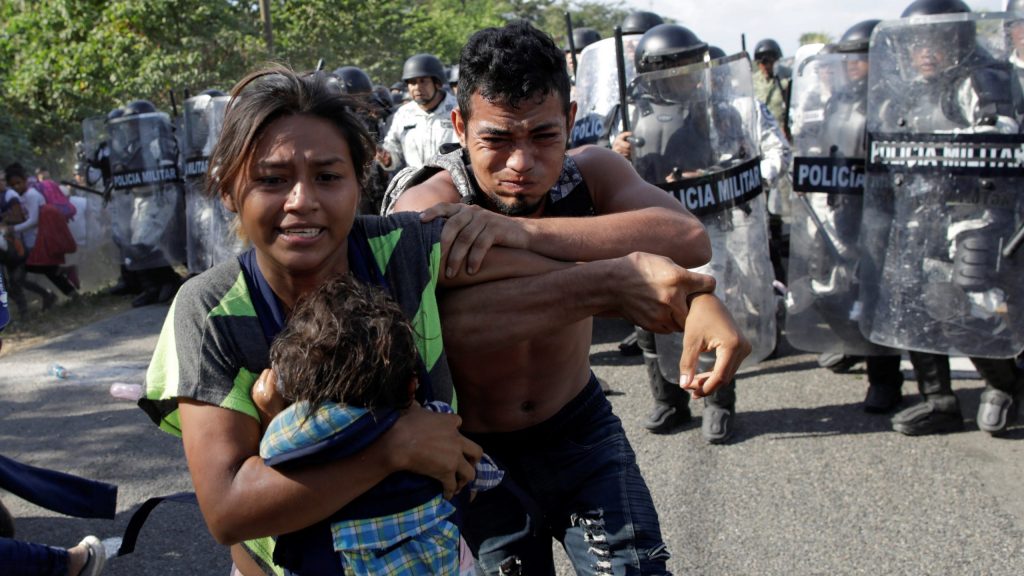
In the first of a two-part series, researcher Paula LeRoy discusses several ways in which poverty and violence interact in El Salvador. Of particular emphasis in this analysis is the inadequate fulfilment of the 1992 Peace Accords. The companion article (forthcoming) will assess the viability of potential responses to the issues discussed here.
Reconstructing the Notion of Youth
Youth are variously described as the hope and future of our species or the most irresponsible and potentially violent of our kind. Unfortunately, it seems as though this later view has gained ground among certain social critics who see a large youth populations as potentially destabilizing to society. As Shahbaz Israr Khan argues, it’s time to reconstruct our notion of “youth”.
Trauma-Sensitive Peace-Building: Lessons for Theory and Practice
Over the past several decades, peace-building and trauma studies have emerged as interdisciplinary fields that seek to better understand their respective social phenomena and develop appropriate responses. Practitioners of peace-building often work in severely conflicted settings with groups that have been exposed to traumatic events, while a number of trauma professionals interact with individuals and groups from conflicted regions. Despite increased cooperation based on the work of scholars and practitioners who have begun to explore the intersection between peace-building and trauma, significant challenges remain, particularly concerning how peacebuilders can make their work more trauma sensitive. This article provides a brief overview of the fields of trauma studies and peace-building, highlights connections between the two areas, reviews recent literature, and discusses the concept of trauma-sensitive peace-building and several challenges of conducting practice in this area.
This article is extracted from Zelizer, C. (2008) Trauma-Sensitive Peace-Building: Lessons for Theory and Practice. Africa Peace and Conflict Journal 1 (1), p. 81-94.
To access the full journal, please contact editor@acpj.upeace.org
Religions and War
The study of religions and war is somewhat inchoate, yet for many years scholars have noted the important role religion plays in national, ethnic and international conflicts. Many have recently pointed to the use and abuse of religious symbolism by politically motivated leaders who employ religious language as a means of generating support for purportedly righteous causes.
We have become increasingly aware that when conflicts are couched in religious and moral language, followers often quickly and enthusiastically fall in line many willing to make ultimate sacrifices to fight on God s behalf, or at least on God s side as defined by their leaders.
Whether such political leaders are sincere in espousing religiously-imbued rhetoric or whether they are simple demagogues, the approach clearly works. It works to a great extent because it seems that many people, no matter what their political leanings, prefer to reduce complex socio-economic, or political conflicts into a zero-sum values game of right and wrong.
Greed or Grievance in Colombia. Why does the FARC keep fighting?
Katharina Röhl analyses the driving forces behind the Revolutionary Armed Forces of Colombia (FARC) in their continuing fight in an ever more violent armed conflict that has now lasted over four decades. While grievances certainly have been important, increasingly greed plays its part which in turn leads to new grievances.