
Responsible Governance: A Panacea to Conflict in Niger Delta
The Niger Delta region of Nigeria has become known for spates of violence and conflict that have eluded attempts at peaceful resolution. This paper traces the crisis in relation to the current attributes of the region and advocates for responsible governance, which embraces corporate social responsibility, along with trustworthy national and state governance as panaceas to the entrenched cycles of violence and conflict in the Niger delta region.
The Unraveled and Disquieting Human Rights Violation of Afghanistan
The issues of Human Rights violations have always been of grave concern to the Human Right Defenders. The cases of human right violations ignite fury and anguish and pose challenge for the world. This paper here forth brings forward the odious crime of ‘Bacha Bazi’, and explains how the organized crime takes place in the country, it reflects on the plight of the victim, questions the responsibility of the government to act and pushes for humanitarian intervention. It states that though the crime is restricted to one country but the onus of demolishing this traditional practice lies on the international community as a whole. The world should therefore come together and join hands to save the future of the Afghan Boys.
Keywords: Bacha Bazi, International Conventions, Human Rights, Young boys, Afghanistan, Sexual Slavery
Permanent Emergency Powers in France: The ‘Law to Strengthen Internal Security and the Fight Against Terrorism’ and the Protection of Human Rights
On November 1, 2017, France introduced a new Counter-Terrorism Law ending a two-year state of emergency and making many of the exceptional measures taken under the state of emergency permanent law. Taking into account past practices of ethnic profiling displayed by the French police, the passing of the law constitutes a worrisome development and raises a number of concerns about France’s compliance with its human rights obligations. The paper discussed these implications of the new law in the wider context of counter-terrorism trends.
Keywords: counter-terrorism, ethnic profiling, human rights, state of emergency
From Vienna to New York: Diverging attitudes and expectations among NPT members spell trouble for the 2015 NPT Review

The resurgence of Cold War style rhetoric between Russia and “the West”, ongoing concerns over North Korea’s nuclear program, a still elusive nuclear deal with Iran, and the recurrent fear of nuclear-armed non-state actors all stand as stark reminders that humanity still lives with the unacceptable risk of nuclear war. In this timely and important article, Rob van Riet reviews the promises and ambiguities of recent conferences, summits, working group sessions, legal actions, and negotiations on nuclear weapons, and evaluates the potential of the NPT review conference in May this year to make real political progress towards the goal of nuclear disarmament.
Iran and the Centrality of the IAEA
Iran and the Centrality of the IAEA Author: Dr. Aldo Zammit Borda Originally published at Peace and Conflict Monitor on 03/15/2005 Introduction In February 2005, Iran rejected an EU-3(1) offer that would have limited its nuclear capabilities, to replace its heavy-water nuclear reactor with a lightwater reactor2. This offer was made as part of the […]
The Role of Identity in Georgia s Security Policies: Critique of Realism
The BBC reports (May 5, 2004) that the “Georgian leader Mikhail Saakashvili has imposed direct presidential rule in the rebel region of Ajaria. The moves came amid growing pressure on Ajaria’s leader Aslan Abashidze to accept Tbilisi’s authority or resign. The Georgian government has warned Aslan Abashidze that he has only a few hours to step down and avoid bloodshed.” We offer Vahagn Muradyan’s article on the problems of identity in Georgia in explaining its Security Policies.
The Japanese Constitution as Peace System
The wars in Asia would seem to demand that certain European countries, the U.S., and Japan all re-examine the value systems that presumably provided the justification for those wars. Many situations of “instability” in this century were actually based on the preconceptions and deeds of the nations that applied that label. Now as ever, if a country has reason to be opposed to something, it will typically display a tendency to assume that other countries are engaged in strategic designs or acting from an adversarial position.
The business of war
Saddam was captured by regular troops. However, underlying the tactical and strategic operations in Iraq, has been and is an emerging new generation of US military tactics that relies increasingly on sophisticated information and communication technologies, which are not only developed and produced by the civilian industry, but can in fact only be maintained and operated by civilian experts.
The Day War Broke Out
News editor, Joseph Schumacher, checks the editorials around the world on THE DAY WAR BROKE OUT.
Ukraine Conflict: Resolution through Negotiation
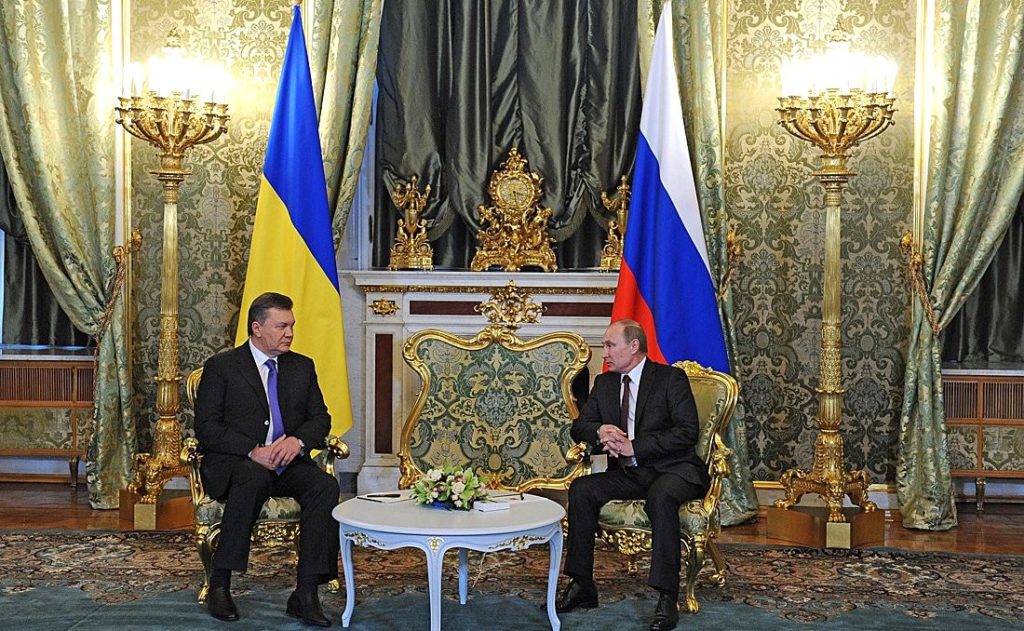
This paper analyzes the Ukrainian crisis from an international perspective, drawing on the theories of realism, neo-colonialism, and structural functionalism. It posits the necessity to include all the conflicting parties in a negotiation process in order to secure a sustainable peace agreement and proposes a detailed negotiation framework.