
Europe’s second conquest of Latin America
With a view to promoting public discussion and debate about these agreements, we present here an analysis of the implications and scope of some of those that have already been signed. We also analyse the implications of some European Union documents, published over the last two years, that set out the EU’s strategy and intentions in the negotiations.
The UN’s Intellectual Challenge Today
The future is here, the world is changing, and the United Nations must as well. In view of that, the United Nations Intellectual History Project (UNIHP) nears completion. It identifies three types of challenges for the UN: Intellectual, participatory, and personnel. Louis Emmerij, co-director of the UNIHP, brings us this synopsis of the project and what it means for the UN.
The creation of Iraq’s food insecurity 1980-2008
The fertile lands between the Tigris and Euphrates rivers, and the wheat planes just south of Basra were, until the 1980s, the base of a robust agricultural sector in modern Iraq. This essay traces the steady and tragic decline of the Iraqi food system over the last 3 decades, emphasizing the political and economic policies of the US, Turkey, the former Baathist regime in Iraq, and the UN.
Violence and Poverty Entangled in El Salvador
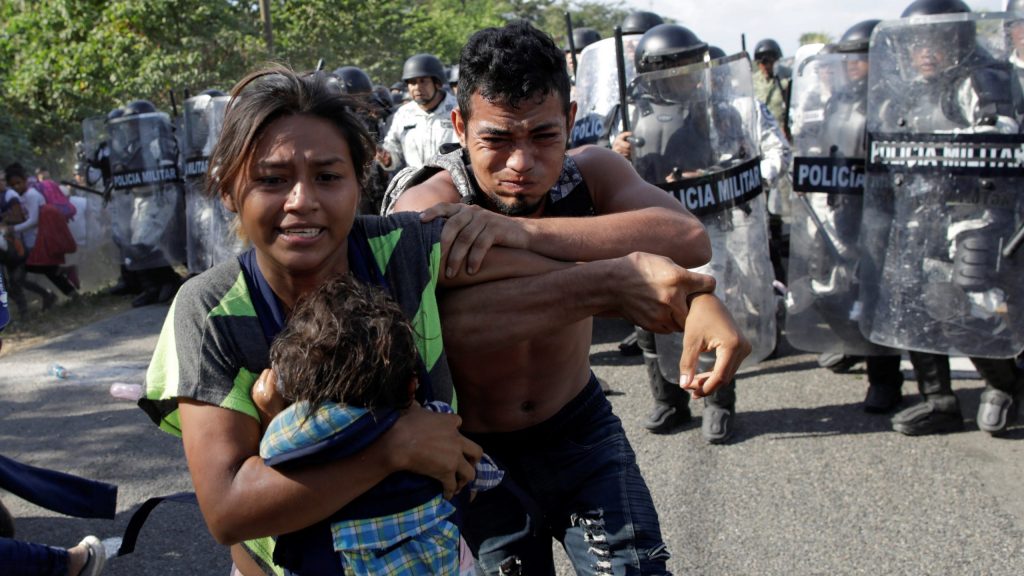
In the first of a two-part series, researcher Paula LeRoy discusses several ways in which poverty and violence interact in El Salvador. Of particular emphasis in this analysis is the inadequate fulfilment of the 1992 Peace Accords. The companion article (forthcoming) will assess the viability of potential responses to the issues discussed here.
Reconstructing the Notion of Youth
Youth are variously described as the hope and future of our species or the most irresponsible and potentially violent of our kind. Unfortunately, it seems as though this later view has gained ground among certain social critics who see a large youth populations as potentially destabilizing to society. As Shahbaz Israr Khan argues, it’s time to reconstruct our notion of “youth”.
Transitional Justice in Burundi: Expectations and Concerns
Vital Nshimirimana discusses the transitional justice process as planned by the government of Burundi for 2012. He argues that issues including ongoing insecurity, human rights abuses, lack of dialogue and trust among social partners, as well as lack of rule of law will undermine the process.
Challenges to Disarmament, Demobilization and Reintegration: The Case of the Niger Delta
It is my contention that, desirable as it is to conduct a DDR programme in the region, there are certain critical preconditions that have to be met for it to be successful. Analysing these preconditions was the main focus of this paper and contribution to the proposed DDR in the Niger Delta region of Nigeria.
But it will take more than disarmament, commitment and drawn out negotiations to obtain peace in the Niger Delta.
Not only are stakeholders faced with a history of corruption and bad governance, poverty and youth unemployment, but also and arguably the biggest challenge of the future: trust. Solomon Inuwa analyses, with first hand experience, the core needs to be met before embarking on the first steps towards peace.
Can the European Union be a peace-maker in the world? In Kosovo?
Jan Oberg discusses the legality of Kosovo’s declaration of independence, the dangers of an increasingly militant and tactless EU foreign policy, and the continued need for creative thinking and enlightened policy reform.
Mantras and Maxims about Mabhouh: Analyzing An Information Overload
What is the real story behind Mahmoud Al-Mabhouh’s Dubai death? After understanding the Palestinian Question, Hamas and Mossad, this essay will tackle an information overload and analyze how Israel’s The Jerusalem Post, Dubai’s Khaleej Times and Britain’s The London Independent covered this James Bond style, January assassination. Who said what, how and why; terrorists and spies, accusations and blame, military shopping-sprees, involvement of outsiders and identity fraud.
Who Will Save Darfur
Genocide in Darfur is stuck between international bureaucracy and lethargic, discriminate Sudanese politics. Pkalya probes Western states, special interests, and humanitarian aide initiatives, while we sit and wait to see who will save Darfur.