
Human Rights in the Future of Emerging Virtual States
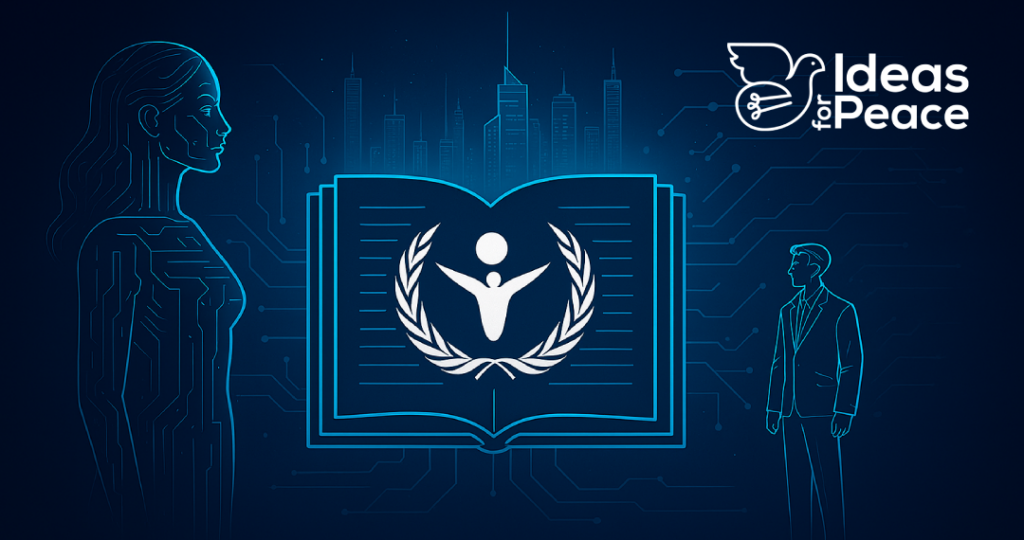
Imagine a futuristic society, where everything is digitalized. Not just work, but meeting friends, traveling, and even the state we live in is now online. Now people are having heated discussions on whether to have their consciousness uploaded onto a cloud service they prefer. Now then, how would statehoods be formed, and who can we define as ‘human’? What changes and challenges would human rights face? As the possibility of more pandemics to come, under the extreme change of climates, this essay ponders over the idea of a fully digitalized future, and a few matters of human rights we need to consider.
Is the War in Iraq Justified Under International Law?
“All Members shall refrain in their international relations from the threat or use of force against the territorial integrity or political independence of any State, or in any other manner inconsistent with the Purposes of the United Nations.”
INSPECT THIS: WMD Inspections in the United States?
INSPECT THIS: WMD Inspections in the United States? Author: Frida Berrigan, World Policy Institute Originally Published at Peace and Conflict Monitor on: 04/14/2003 Category: Special Report As the controversy over how long the United Nations should continue weapons inspections in Iraq rages on, questions are being raised about the United States’ stockpile of chemical and […]
Pawn of pawns: USA, Africa and empire in the 21st century
President Bush’s trip to Africa poses many questions, including the nature of US influence there and elsewhere, the extent to which African states can play off the US against the EU, and the effect on weapons research. Matt Norton in this guest editorial takes a journey through some of the issues.
Challenging US War Myths
About the book: When many Americans hear that the US may go to war against another nation, they tend to believe there’s probably a good reason for it or that no viable alternatives exist—or they don’t think about it at all. They trust their leaders to represent them and defend their values. They accept their leaders’ claims that war is to ensure their safety when others wish to harm them.The parties of war play on Americans’ basic values to bring them online. The media reassures them that the reasons for war are altruistic— that Americans wish to spread democracy and allow others to adopt their way of life. But is this the case?
With 24 compelling illustrations, maps and graphs, this book is intended to serve as a tool for peace advocacy. Well known peace advocates respond to 19 of the most common illusions held by the American public which weaken their opposition to Washington’s wars.
Peacekeping and the New World Order
The collapse and disintegration of the Soviet Union fundamentally altered the structure of international relations and the expression of violent conflict. Where war was once considered the business of nation states, non-state actors and intrastate wars have come to the forefront of global security concerns. Givi Amiranashvili analyses the legal and political aspects of UN peacekeeping operations in this new geopolitical landscape.
Dumb, Stupid Animals to be Used
Dumb, Stupid Animals to be Used Author: Kim Petersen Originally Published at Peace and Conflict Monitor on: 07/04/2007 Category: Book Review Home Front: The Government’s War on Soldiers By Rick Anderson (Clarity Press, 2004) ISBN: 0-932863-41-8 Rick Anderson, a reporter for Seattle Weekly, opens his book, Home Front: The Government’s War on Soldiers, by referring […]
Cold Peace
A Russian scholar presents an exhaustive examination of American public opinion toward Russia, from 1920 to the present day. An essential book for the libraries of experts and policy makers.
Is the overseas deployment of Japan’s Self-Defense Force (SDF) illegal? Rethinking the Japanese contribution to international peace and security
Noriko Hashimoto discusses the legal and political arguments around the deployment of Japan’s self defense forces (SDF) for overseas missions, going beyond the constitutional debate to question the broader concept of national contributions to international society.
Nuclear Dangers and Challenges to a New Nuclear Policy
Nuclear Dangers and Challenges to a New Nuclear Policy Author: David Krieger Originally Published at Peace and Conflict Monitor on: 01/04/2008 Category: Policy It is worthwhile asking the question: What are nuclear weapons? In some respects the answer to this question may seem obvious, but this is not necessarily the case. To some, nuclear weapons […]