
Lack of empathy as a threat to peace
Key words: empathy, violence, international relations, cosmopolitanism, peace
Afghanistan Beyond Bonn: Keep the Champagne Corked
Recent elections in Afghanistan went off without a hitch, but the country – currently with a development ranking of 172 out of 178 – is still very much in the woods. The crime rate is high and poppy cultivation is on the rise. Insurgency violence is growing as well, with 50 US soldiers killed in the first half of 2005, compared to 60 soldiers killed in the first three years following the 2001 invasion. Even as the newness of the Afghan mission fades, the international community should dig in: There’ve a long way to go yet.
It’s not over. Reports that Afghanistan is at peace, articles on the “establishment of democracy” are everywhere in western media. However these claims, too often made by journalists ‘in the field’ just long enough to get the dateline for big events like the recent elections, must be read in the context of a continually emerging state of civil war.
The Bonn conference in December 2001 after the collapse of Taliban rule envisaged, “the establishment of a broad-based, gender-sensitive, multi-ethnic and fully representative government”, which has in theory taken place. The most important aim of that same conference, though, was the establishment of peace and security in the country. Yet the elements of war still exist, and only the presence of ISAF (International Security Assistance Force) has prevented possible civil war. Democracy has arrived in Afghanistan only in name. The reality is much messier, particularly in the south and east.
The Mizrahi-Palestinian Connection, Part III
Scholarly analysis of the Israeli-Palestinian conflict has depicted it as a conflict between two homogenous entities, namely Israel and the Palestinians. However, scholars largely ignore the impact of the “inner-Israeli” conflict between Mizrahim and Ashkenazim on the “external” conflict between Israelis and Palestinians. Not only are the Mizrahim excluded from the peace process itself, but academics also fail to research the role they play in the conflict, while their occasional public role is that of extremely right-wing “Arab-haters” who prevent the Ashkenazi-dominated “liberal peace camp” from reaching a solution– hence they are portrayed as an obstacle to peace.
The Mizrahi – Palestinian Connection, Part I
holarly analysis of the Israeli-Palestinian conflict has depicted it as a conflict between two homogenous entities, namely Israel and the Palestinians. However, scholars largely ignore the impact of the “inner-Israeli” conflict between Mizrahim and Ashkenazim on the “external” conflict between Israelis and Palestinians. Not only are the Mizrahim excluded from the peace process itself, but academics also fail to research the role they play in the conflict, while their occasional public role is that of extremely right-wing “Arab-haters” who prevent the Ashkenazi-dominated “liberal peace camp” from reaching a solution– hence they are portrayed as an obstacle to peace .
Fire, Water, Earth: The Kashmir region
The India-Pakistan conflict has seen much progress toward resolution in the last years, with bilateral cricket matches taking place and buses now passing to the Kashmir region. Yet tension in the form of arms shopping and multiple missile tests still persists. Through analyzing the three aspects of the conflict – fire, water, and earth – Semu Bhatt proposes some tentative solutions.
Towards Conflict Transformation in Nepal: A Case For UN Mediation
UN peace facilitators could help the Nepalese to draw up a viable compromise, perhaps engaging the parties and the civil society in “constitution making” as itself a part of the process of conflict transformation. They could help overcome the problems of mutual distrust, and ensure transparency and compliance with the code of conduct. UN resident coordinator in Nepal, Matthgew Kahane, has said that UN help could build trust in both sides to facilitate the resumption of the peace negotiations. Unfortunately, the government of Nepal can veto UN mediation because the UN can only intervene if it has the consent of all parties.
Greed or Grievance in Colombia. Why does the FARC keep fighting?
Katharina Röhl analyses the driving forces behind the Revolutionary Armed Forces of Colombia (FARC) in their continuing fight in an ever more violent armed conflict that has now lasted over four decades. While grievances certainly have been important, increasingly greed plays its part which in turn leads to new grievances.
Sudan’s 50 Year War
Ferdinand Katendeko looks at the underpinnings of the conflict in Sudan, which has taken over four and half million lives, and asks what changes of attitude amongst the combatants are necessary for peace to take root in this conflict.
Peace Journalism: A Needed, Desirable and Practicable Reform
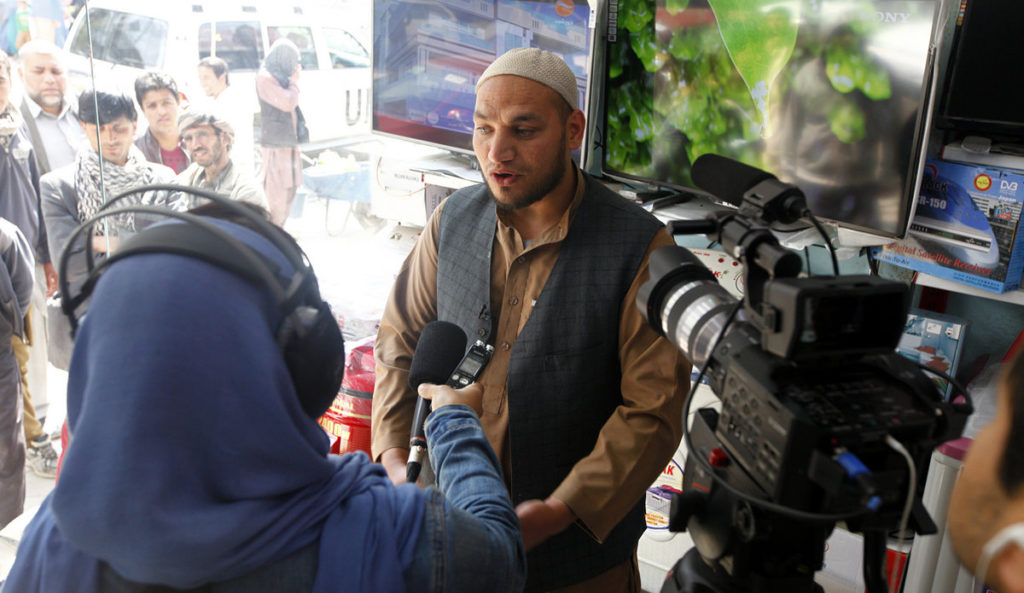
The idea of peace journalism has attracted its share of critiques and controversies, but as Vanessa Bassil argues, it still offers a much needed and practical, peace-oriented perspective from which media can be analysed and produced.