
Un análisis de la Guerra Fría entre Arabia Saudita e Irán
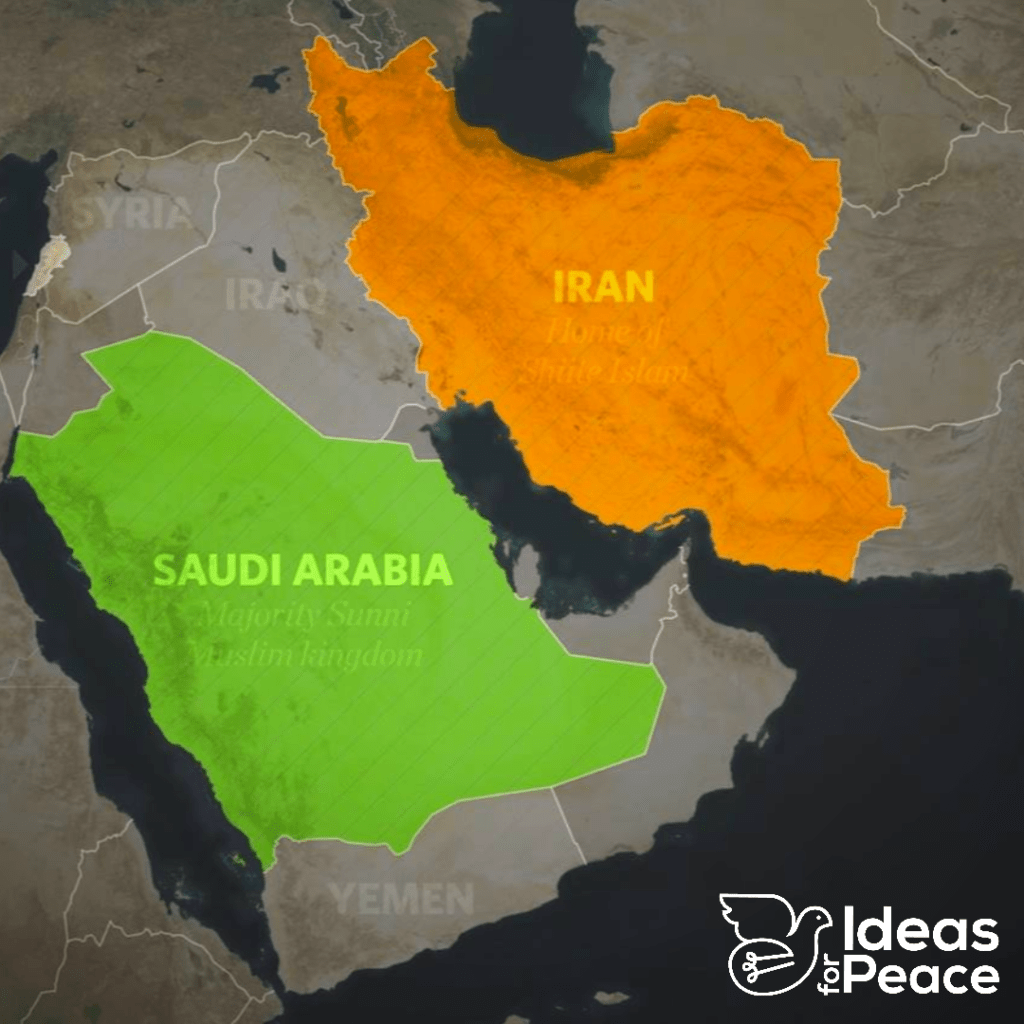
Este artículo de investigación presentará un trasfondo histórico y las perspectivas de ambos estados-nación involucrados en el conflicto; además, el investigador analizará el conflicto religioso entre los dos estados y sus roles en el conflicto alrededor del Golfo Pérsico y, finalmente, tratará de establecer si el conflicto entre las dos potencias islámicas hegemónicas equivale a una guerra fría.
The Power of Timely Intervention
Michael S Lund, Preventing Violent Conflicts: A Strategy for Preventive Diplomacy, USIP Press, 1996
Building Walls in the Free World
Building Walls in the Free World Author: Ross Ryan Originally Published at Peace and Conflict Monitor on: 11/01/2007 Category: Editorial It may seem odd to dedicate this November issue of the Peace and Conflict Monitor to the building of walls directly after our October issue, which dealt with globalization and the seeming irrelevance of national […]
Cold Peace
A Russian scholar presents an exhaustive examination of American public opinion toward Russia, from 1920 to the present day. An essential book for the libraries of experts and policy makers.
Nuclear Dangers and Challenges to a New Nuclear Policy
Nuclear Dangers and Challenges to a New Nuclear Policy Author: David Krieger Originally Published at Peace and Conflict Monitor on: 01/04/2008 Category: Policy It is worthwhile asking the question: What are nuclear weapons? In some respects the answer to this question may seem obvious, but this is not necessarily the case. To some, nuclear weapons […]
The Rise of Private Military Companies and the Legal Vacuum of Regulation
This paper discusses the rise of the private military industry as a challenge to contemporary international law. In recent times, the privatization of activities preserved by governments have been proposed and implemented;, such as communication facilities, garbage collection, electricity supply, immigration services and much more. Military operations have not been left out. The increasing privatization of military activities is proving to be a major challenge to international law. The literature on Private Military Companies (PMCs) is mind-boggling, but neither extensive nor exhaustive. As a new phenomenon, it receives situational attention. For example, when the operations of Executive Outcomes and Sandline International were unearthed by the press in the 90s,’ numerous scholarly material was written, but with distinct themes like the efficiency of the corporations and the human rights violations carried out, as well as the legal vacuum created by ex-professional soldiers banding up to create and legally incorporate a mercenary outfit. The issue of PMCs being present in weak states and ravaged war-torn zones is an understatement, yet these corporations are registered mostly in the U.S., U.K. and South Africa. The articles on this issue are usually highly polarized; opponents verses proponents of these corporations, as the activities of these outfits do not fit within any conventional classification as actors of war in the law of war.
This paper describes the history and definition of PMCs and analyses how the operations of these corporations affect human rights, sovereignty and states´ monopoly of violence. The paper also focuses on the legality of PMCs and proceeds to discuss how to regulate the industry. The paper concludes in favor of tougher regulatory controls through new international legal framework and national legislation to deal with mercenaries as decisively as with other non-state actors who wield violence.
US-Russia negotiations on missile defence
Key Words: US, Russia, Security Council, Nuclear Arms, Missile Defense Shield, Human development, Arms Stockpiles, conflict resolution, Negotiation, United Nations
What if there was no UN?
Varghese Theckanath traces the history of the United Nations and briefly reviews its successes. Theckanath argues that these successes outweigh the failures and, ultimately, that the great potential of the UN to promote human development and international understanding makes it an invaluable tool in the effort to build a more peaceful and secure world for everyone.
China’s ADIZ: A New Phase of the Pacific Arms Race
This paper offers an in-depth analysis of the history, status, and implications of the recent air defense identification zone (ADIZ) disputes in Northeast Asia involving China, South Korea, Japan, and the United States. The interests and actions of all parties are considered in light of the larger political and economic trends in the region, as well as the legal basis for claiming an ADIZ. Strategies to re-frame and deescalate the conflict and avoid military confrontation are suggested.
Charlie Wilson’s War
Author George Crile published Charlie Wilson’s War in 2003. The former CBS journalist began researching the U.S. involvement in Afghanistan around the 1980’s. Crile investigated the life and work of Charlie Wilson, a former U.S. State Representative from Texas and former U.S. naval officer. Wilson is most known for leading “Operation Cyclone,” a CIA operation which allegedly led to the creation of the Afghan Mujahidin groups.
In a PCM interview with University for Peace Rector John Maresca, Charlie Wilson’s War was a highly recommended resource for understanding the fragile state of Afghanistan.