
Europe’s second conquest of Latin America
With a view to promoting public discussion and debate about these agreements, we present here an analysis of the implications and scope of some of those that have already been signed. We also analyse the implications of some European Union documents, published over the last two years, that set out the EU’s strategy and intentions in the negotiations.
Violence and Poverty Entangled in El Salvador
In the first of a two-part series, researcher Paula LeRoy discusses several ways in which poverty and violence interact in El Salvador. Of particular emphasis in this analysis is the inadequate fulfilment of the 1992 Peace Accords. The companion article (forthcoming) will assess the viability of potential responses to the issues discussed here.
Progress Can Prevail in El Salvador
Last month, Paula LeRoy’s article “Violence and Poverty Entangled in El Salvador” described the many interlocking challenges to peace and prosperity in the country. This article offers an inspiring range of potential solutions and practical ideas for how those challenges an be overcome.
Aftershocks of Honduras’ Political Earthquake
Is the coup d’état in Honduras a mirror that the FMLN government of Mauricio Funes, El Salvador’s armed forces, grassroots movement and political parties ought to be looking into? If they do so, what will it show them?
El Salvador’s Election as Conflict Transformation
The victory of a representative of the former guerrilla FMLN movement in El Salvador’s presidential election – the culmination of a process that began with the peace accords in 1992 – is an exemplary case of conflict transformation, says Victor Valle.
This article is cross-posted with the online magazine Open Democracy www.opendemocracy.net
The Deportation Death Sentence: An analysis of the United States’ role in perpetuating Human Rights abuses against should-be Honduran refugees
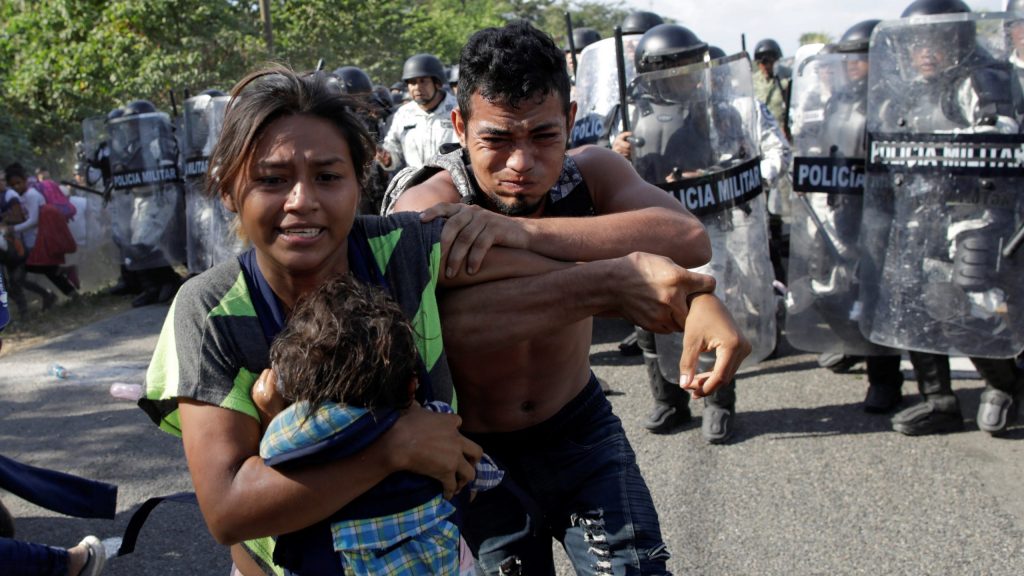
The past few years have been unprecedented in the United States, as a record-setting number of Latino immigrants crossed its southern border, including thousands of unaccompanied minors. Recognizing that many of these children were fleeing severe gang and cartel violence, the United Nations began advocating for the recognition of organized crime as a potential cause for refugee status. Children crossing the border are often in need of international protection, but it goes undocumented and underprovided. In this paper, I will analyze how the United States’ unwillingness to recognize certain children as refugees is perpetuating grave abuses in human rights for children fleeing gang and cartel violence with a specific focus on Honduras.
Stranded migrants, human rights, sovereignty and politics
Law, human rights and migration specialists analyze the case of the Cuban migrants who remained stranded for more than two months in Costa Rica, after Nicaragua refused to grant transit visas, truncating their voyage it to the United States. Politics, sovereignty, the application of legal instruments and the fulfillment of the migrants’ human rights: how are they balanced and prioritized as governments make decisions?
This article was originally published in Spanish by the Costa Rican magazine Firma.
The Community of Latin American and Caribbean States (CELAC) and Latin American Integration for the 21st Century
Tara Ruttenberg and Gustavo Fuchs analyze the creation of the Community of Latin American and Caribbean States (CELAC) within the new framework of Latin American Integration in the 21st century. They provide insight into existing regional integration initiatives UNASUR and ALBA, and provide commentary as to how CELAC represents a critical tipping point in Latin American integration free from United States dominance.