
Embezzlement of Public Funds: A Crime against Humanity in Cameroon
Joseph Agbor Effim studies embezzlement in Cameroon, arguing that the consequent suffering experienced by Cameroonians that follows renders it tantamount to a crime against humanity.
Genocide in Rwanda: Draft Case Study for Teaching Ethics and International Affairs
This case aims to use the genocide of 1994 in Rwanda to help students appreciate what may be the roots and common causes of genocides. It is written in the suspicion that there may be some sort of “recipe” that can be followed by political elites bent on the extermination of a group. This article was originally published on http://www.ciaonet.org/isa/wrs01/
Challenges and prospects of AU to implement the Ezulwini Consensus: The case of collective security and the use of force
The “Ezulwini Consensus” has endorsed the Responsibility to protect (R2P) that recognizes the “right to intervene when a State is unwilling or unable to protect its populations” from genocide, war crimes, ethnic cleansing and crimes against humanity. In such situations, the Ezulwini Consensus emphasizes that regional organizations in areas of proximity to conflicts should be empowered to take action. However, the conflict situation in the Eastern DRC has challenged the ICGLR to implement the Ezulwini Consensus. The ICGLR was unable to take appropriate action against Member States who were providing support to armed groups destabilizing other Member States. In order to protect the population under imminent threat and maintain the Great Lakes Region as a specific zone of reconstruction and development, Member States of the ICGLR could demonstrate their political will to respect the fundamental principles particularly of the territorial integrity, national sovereignty, non-interference and non-aggression against another Member State. Besides, the AU could have taken its own responsibility by sending African Experts in order to help the ICGLR to resolve the crisis as the mediator between the Government of the DRC and M23 was no longer neutral.
This paper was presented at the South African Association of Political Studies (SAAPS) 2013 Regional Colloquium on “The African Union: Quo Vadis – the next 50 years” at the University of South Africa on 4 October 2013.
The anniversary of Rwanda: A time for pause
Gerald Caplan calls for personal reflection on the anniversary of the Rwandan genocide – challenging us all to unlearn our hatreds and the common assumption that only “they” are capable of evil.
Who Will Save Darfur
Genocide in Darfur is stuck between international bureaucracy and lethargic, discriminate Sudanese politics. Pkalya probes Western states, special interests, and humanitarian aide initiatives, while we sit and wait to see who will save Darfur.
Prospects for Peace in the East of the Democratic Republic of Congo
Bulelwa Mukenge considers the failures of various peace initiatives in the Eastern part of the Democratic Republic of Congo. Mukenge suggests cooperative dialogue between the Rwandan Government and the Front Democratic for Liberation of Rwanda (FDLR) in order to solve this long-lasting conflict. Since 1994, these peace talks have yet to succeed; preventing a peaceful solution to the prevailing war.
Sudan: Another resource war?
The world’s attention was recently attracted to the Darfur region in the west of Sudan, where the conflict has escalated in recent weeks, fearing a second Rwanda might take place. An estimated 1,000 people per week are dying in the region.
Inclusive Transitional Justice through Truth Commissions: A Book Review
Title: Getting the Truth out of Truth Commissions: Lessons Learned from Five Case Studies
Author(s): Johannes Langer (editor), Miguel Barreto Henriques, Pedro Valenzuela
Publisher: Editorial Bonaventuriana, 2018
Post tenebras lux
The Burundi war is sordid like all the other wars in the world. For this reason it must not be singled out. Burundi is plunged into mourning by a violence that the international community, out of ignorance or oversimplification, tends to simply portray as an ethnic war between Hutus and Tutsis, fanned by ancestral antagonism between these two communities. It’s utterly wrong. The Burundi war is complex and frightfully modern. It is a war for trifling political power and control of the resources. It simply uses the most fallacious pretexts (ethnic group, region, political affiliation) to disguise its true face. In so doing, it utterly resembles so many other armed conflicts in the world
Peace Journalism: A Needed, Desirable and Practicable Reform
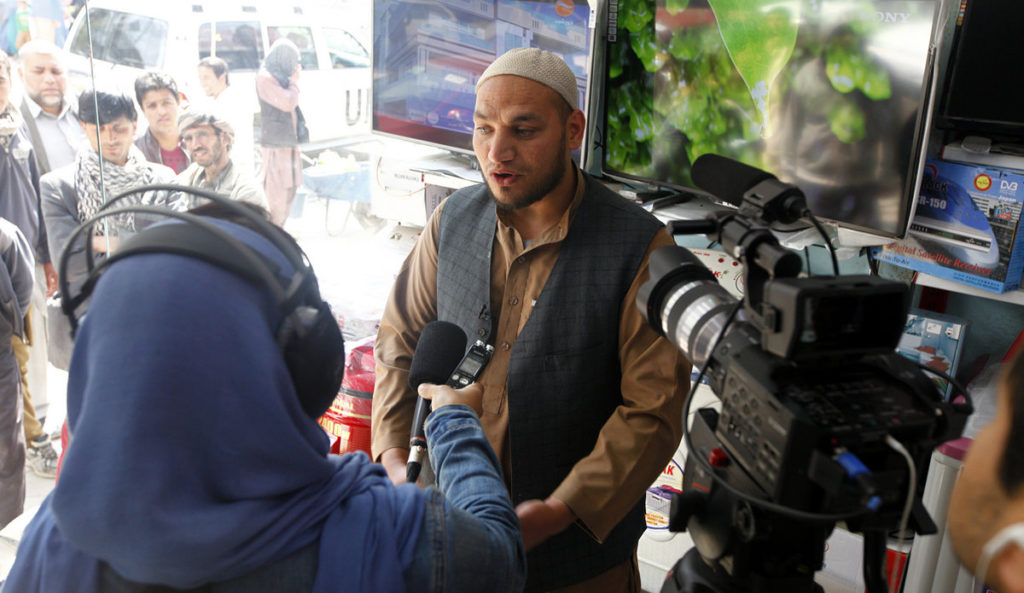
The idea of peace journalism has attracted its share of critiques and controversies, but as Vanessa Bassil argues, it still offers a much needed and practical, peace-oriented perspective from which media can be analysed and produced.