
The evolution of the right to development in international law, from the post-WWII to present times

The right to development emerged from newly independent States and their claim for compensation for the damages caused by colonial rulers
Operationalizing SDG’s through Legally Binding Instrument on Right to Development
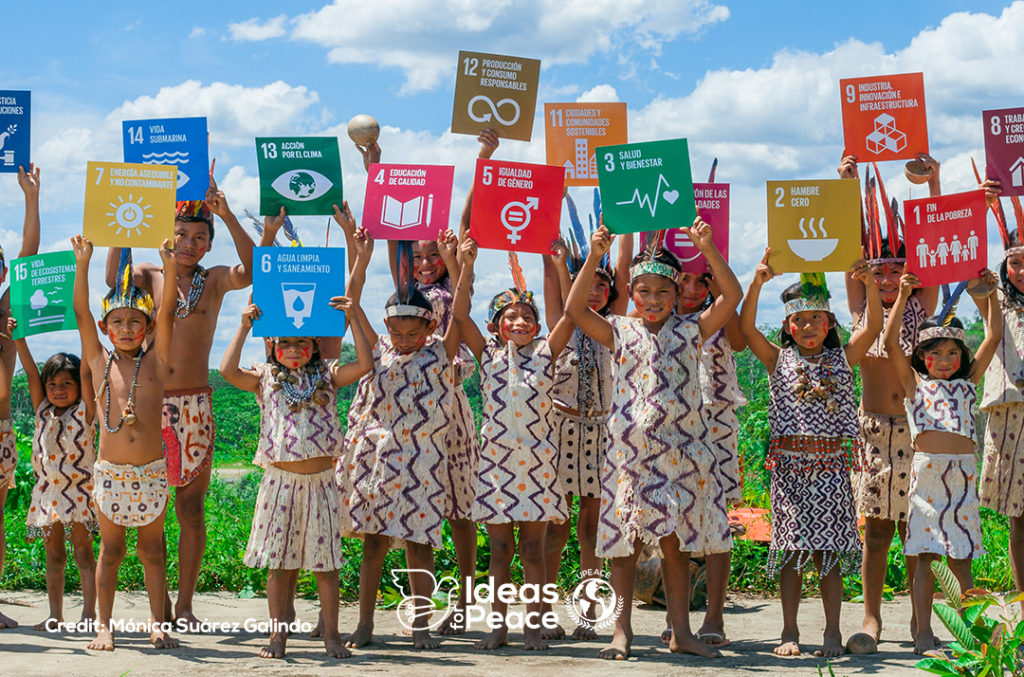
Sustainable development requires the adoption of an international legal framework that guarantees the Right to Development, in this article Manveer Singh Sandhu discusses how it can be adopted
Ideas for Peace Series – Right to Development
This is the 15 publication of the Ideas for Peace Series “Towards a Legally Binding Instrument on the Right to Development” it was written by Dr. Mihir Kanade and it seeks to explain the overall context for the adoption of an international biding treaty to ensure this right
Transitional justice for Mali: The impasse?
Transitional justice for Mali: The impasse? Author: Odette Pires Translated into Spanish by Florencia Prieto For eight years now, Mali has been a scene of a series of armed conflicts involving multiple local, regional, and international actors that are getting more and more entangled in a dead end. Important stakeholders such as France, the United-States, […]
International Lawyer 101
Hartley William Shawcross, who died this month at the age of 101, unravelled the legal underpinnings in international law for trying war criminals. His legacy remains, but so do the complexities.
Environmental Ombudsman in Third Year of Operation
Frans van Haren reports a success story
History Repeats Itself? Costa Rican History Applied to the Honduran Conflict
Whether or not the present Honduran interim government will be fully recognized by the international community remains to be seen. For the time being, however, states must still decide when and how to conduct relations with the military-appointed government, balancing concerns for pressing international issues with the expected validity and permanence of agreements made with that entity. In making such calculations, states must consider the legal status of that government as the valid representative of the Honduran State in international law. Status under law helps define how a state, and therefore its treaties, agreements and contracts, will be treated in courts, tribunals and organizations abroad. This essay uses the legal issues presented in a similar historical case, the 1923 Tinoco Arbitration between Great Britain and Costa Rica. George McGraw analyzes Honduras’ current status in international law. He argues through the application of basic international legal principles such as state continuity, effectivity, and de facto vs. de jure legitimacy. According to the author, this essay hopes to contribute to the current dialogue concerning the transitioning state.
Is the War in Iraq Justified Under International Law?
“All Members shall refrain in their international relations from the threat or use of force against the territorial integrity or political independence of any State, or in any other manner inconsistent with the Purposes of the United Nations.”
Building Respect for the Sheriff
Even in pursuit of the most laudable purposes, the use of military force exacerbates rather than transforms conflict, and perpetuates the cycle of violence and injustice. This is true in compelling cases as well, such as efforts to thwart gross violations of human rights, or for other humanitarian purposes.
Overcoming blanket immunity in national constitutions: Cameroon and the principle of universal jurisdiction
Overcoming blanket immunity in national constitutions: Cameroon and the principle of universal jurisdiction Author: Eric NGONJI NJUNGWE Originally Published at Peace and Conflict Monitor on: 12/05/2008 Category: Analysis II 1. Introduction The adoption by the United Nations (UN) General Assembly of the Universal Declaration of Human Rights (UDHR) on 10 December 1948[1] has been pivotal […]