
Common Things: Communication, Community, Communal Peacebuilding
“I do not have thin fingers, as a farmer, my hands become part of the land and its fruits… I need this thick tombs for nurture the vegetables.” Maria Emma Prada is a “countryside lady” in her own words. A woman which has stood up for the rural women in Colombia.
She is one of the most important leaders in Colombia of ANMUCIC (National association of indigenous, afro -descendent and peasant women of Colombia) a main organization of women of the country.
Maria Emma is a refugee in Costa Rica since 2000. Her life and her family were threatened, on the one hand, by paramilitary groups, fuelled by the false news that emerged about her as part of the guerrilla in the national media. On the other, given her efforts to gain access for her organization to the peasant production and infrastructure government projects, the guerrillas believed that she was a collaborator and informant to the Colombian army. She had no choice but to leave the country.
There is an abysm between the facts and the human rights discourse in Colombia. Despite that the National Constitution consecrates Human Rights as a part of the fundamental rights of Colombian people, reality is way too far of the written laws.
Media is part of this huge gap, owe that, instead of promoting the citizen participation in accordance with an attempt of a negotiation of the armed conflict through peaceful means, it has contributed to the re -victimization of people in the countryside and people of social movements, as well that it has facilitated to all sides – guerrillas, paramilitaries and the government – to legitimate the atrocities of war by focused in heroes and villains actions.
It is necessary that media and journalism help to rethink the country that we are and the country we want to be from a human right´s perspective in the new Colombian post – conflict scenario.
Keywords: Colombian conflict, media propaganda, evil, grassroots media, women organizations, victims, communication.
Inclusive Transitional Justice through Truth Commissions: A Book Review
Title: Getting the Truth out of Truth Commissions: Lessons Learned from Five Case Studies
Author(s): Johannes Langer (editor), Miguel Barreto Henriques, Pedro Valenzuela
Publisher: Editorial Bonaventuriana, 2018
Ecuador: Protest and Power
An additional tally for the Left. Correa, a young economist endorsed by Venezuela’s Chavez, won the run-off elections in Ecuador 26 November 2006. Although he’ll will swear-in with little or no dispute over the election results, Ecuador’s presidency can appropriately be compared to the unkept roads that clamber through the Andes. Guy Hedgecoe analyzes the bumpy boulevard and shift to the left ahead.
Cuban-European NGO Collaboration: The ‘Special Period’
The purpose of this article is to achieve an understanding of the nature of nongovernmental organisations (NGOs) in Cuba and to highlight aspects of the collaboration that has occurred between Cuban and European NGOs. The motivation for undertaking this study is to begin the process of filling the gap in information with respect to Cuba’s NGO community and to get a sense of the circumstances under which international cooperation is carried out on the island. This article constitutes the preliminary findings of an interdisciplinary study of the role of NGOs operating within the context of a revolutionary socialist society. The article begins with essential background to understanding the reasons European NGOs entered Cuba in the 1990s
Greed or Grievance in Colombia. Why does the FARC keep fighting?
Katharina Röhl analyses the driving forces behind the Revolutionary Armed Forces of Colombia (FARC) in their continuing fight in an ever more violent armed conflict that has now lasted over four decades. While grievances certainly have been important, increasingly greed plays its part which in turn leads to new grievances.
War is a Remix: Organized violence from blood sacrifice to cyberattacks
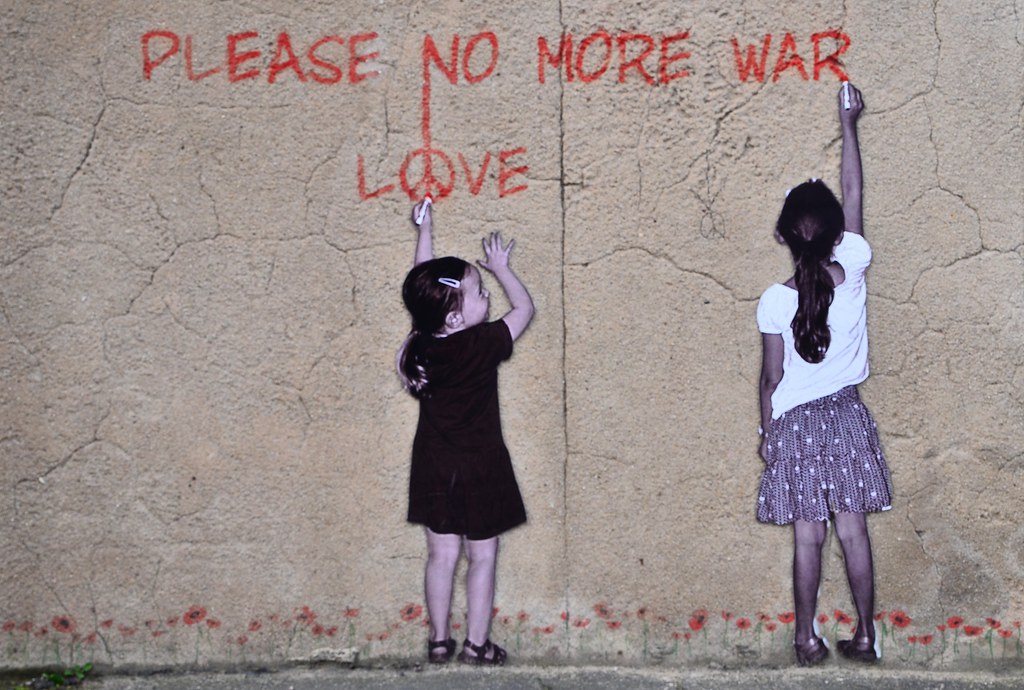
This article applies the concept of remix from media and communication studies to an analysis of the history and transformation of war. From this perspective, each iteration of war can be seen to reference and recombine existing concepts, strategies, and tactics, a process which seems to correspond with the parallel development of technology.