
Violence and Poverty Entangled in El Salvador
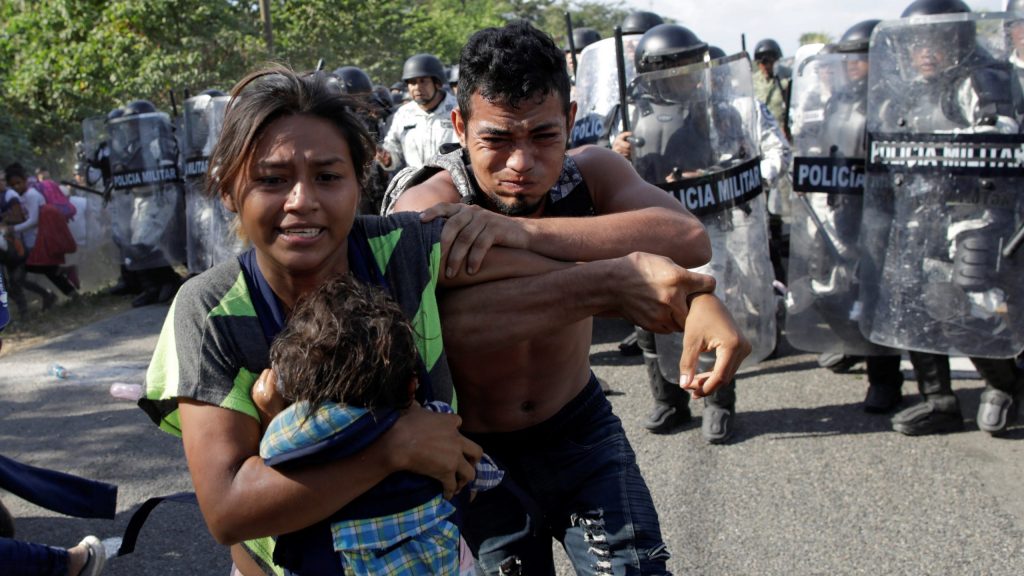
In the first of a two-part series, researcher Paula LeRoy discusses several ways in which poverty and violence interact in El Salvador. Of particular emphasis in this analysis is the inadequate fulfilment of the 1992 Peace Accords. The companion article (forthcoming) will assess the viability of potential responses to the issues discussed here.
Progress Can Prevail in El Salvador
Last month, Paula LeRoy’s article “Violence and Poverty Entangled in El Salvador” described the many interlocking challenges to peace and prosperity in the country. This article offers an inspiring range of potential solutions and practical ideas for how those challenges an be overcome.
“Tómale la mano y dale una salida” (take by the hand and show a way out)
Catherine Bellamy sits ringside to witness one NGO’s work to bring pride and hope to the violent favelas of Rio de Janeiro.
Aftershocks of Honduras’ Political Earthquake
Is the coup d’état in Honduras a mirror that the FMLN government of Mauricio Funes, El Salvador’s armed forces, grassroots movement and political parties ought to be looking into? If they do so, what will it show them?
From suffering to liberation: Mindfulness meditation in critical pedagogy
This article explores the problems and possibilities of implementing Buddhist mindfulness meditation in critical pedagogy. Buddhism and critical pedagogy are compared, particularly their conceptions of suffering, liberation, and self. Challenges to the adaptation of critical pedagogy in Buddhist cultural contexts are addressed. Mindfulness meditation is proposed to enrich critical pedagogy and expand its cultural applicability.
Stranded migrants, human rights, sovereignty and politics
Law, human rights and migration specialists analyze the case of the Cuban migrants who remained stranded for more than two months in Costa Rica, after Nicaragua refused to grant transit visas, truncating their voyage it to the United States. Politics, sovereignty, the application of legal instruments and the fulfillment of the migrants’ human rights: how are they balanced and prioritized as governments make decisions?
This article was originally published in Spanish by the Costa Rican magazine Firma.
ILO Convention 169: Free, prior consent and the Diquís Hydroelectric Project in Costa Rica
The Costa Rican government is pushing for the construction of the Diquís Hydroelectric project in the Southeastern part of the country, where indigenous peoples live. The Costa Rican law recognized the autonomy of these territories in the 1970’s and yet it insists on ignoring and overruling its own law, for the “benefit of the country.” A similar situation in Brazil has resulted in massive protests as the indigenous peoples are being marched upon. Their right to free, prior and informed consent, as prescribed by the ILO’s Convention 169 is being ignored. The Organization of American States as well as Special Rapporteur James Anaya have already expressed their concern about the situation.
The Tlatelolco Treaty at 50: The Continued Relevance of the Latin American Nuclear Weapons Ban
Latin America and the Caribbean went nuclear weapons free in 1967 with the signing of the Tlatelolco Treaty, an historic accomplishment and an important reference in contemporary International relations.
In 2013, the World Future Council, together with the United Nations Office for Disarmament Affairs and the Inter-Parliamentary Union, honoured the Tlatelolco Treaty with the Future Policy Award on disarmament for its invaluable contribution to advancing regional peace and security, creating a precedent and inspiration for subsequent Nuclear-Weapon-Free Zones and providing impetus to the global elimination of nuclear weapons.
On 13 February, OPANAL together with the Mexican Foreign Ministry will host a high-level seminar to commemorate the treaty’s anniversary and discuss its relevance in addressing current and future nuclear threats.
The political Crisis of the 2017 Honduran Election
Daniel Bagheri reports on the ongoing tensions in Honduras following the 2017 national elections.
The Community of Latin American and Caribbean States (CELAC) and Latin American Integration for the 21st Century
Tara Ruttenberg and Gustavo Fuchs analyze the creation of the Community of Latin American and Caribbean States (CELAC) within the new framework of Latin American Integration in the 21st century. They provide insight into existing regional integration initiatives UNASUR and ALBA, and provide commentary as to how CELAC represents a critical tipping point in Latin American integration free from United States dominance.