
Harnessing Youth Power for Peace: A Perspective from Russia
The energy of youth is largely responsible for powering violent conflict, as well as social movements for positive social change. As Dr Jatinder Khanna shows, the application of youthful energy to intercultural peace programs and political activism are essential for peacebuilding in Russia and elsewhere.
From suffering to liberation: Mindfulness meditation in critical pedagogy
This article explores the problems and possibilities of implementing Buddhist mindfulness meditation in critical pedagogy. Buddhism and critical pedagogy are compared, particularly their conceptions of suffering, liberation, and self. Challenges to the adaptation of critical pedagogy in Buddhist cultural contexts are addressed. Mindfulness meditation is proposed to enrich critical pedagogy and expand its cultural applicability.
Reflections of Refugees in Africa
Africa’s numerous conflicts, including in Central African Republic, South Sudan, Somalia, Nigeria, Egypt, Democratic Republic of Congo and elsewhere, together produced immense forced displacement totals in 2014, on a scale only marginally lower than in the Middle East (UNHCR, 2015). Women, men, and children have been consigned to foreign countries for safety where their indispensable needs of humanity are becoming a luxury. Furthermore, the definition of one as a refugee has caused more exclusion of non-state communities as well as expansion of their dehumanization.This paper will explore the status of refugees in Africa in terms of legal environment, communication, schooling and livelihood. This will be a desk top review taking qualitative approaches. It will draw information from previous surveys, reports, journals, books, and case studies.
Teaching Peace from Tales of the City: Peace Education through the Memoryscapes of Nagasaki
To what extent can the memoryscapes of a city contribute to peace education? I argue that narratives both create and destroy the imaginaries of peace. The failure of peace museums to create an effective vision of peace reduces them to the level of historical museums. Using the framework of peace education, I explore the exhibitions, contents, objects, and messages presented in the Nagasaki Atomic Bomb Museum and the Oka Masaharu Memorial Nagasaki Peace Museum. To demonstrate their contributions toward peace education, I analyze the power of narratives contained in these two peace museums and their positioning in the geography of peace education in Japan. Finally, I suggest which factors support the realization of peace education in peace museums.
Strategies for building awareness for the potential of peace education in Cameroon
Peace education is yet to become a reality in Cameroon. This it seems because many persons do not know about it or better still because many persons are not aware of its benefits. Though unaware or ignorant about peace education, there are lots and lots of conditions that warrant the teaching of peace education in Cameroon. The purpose of this paper is to discuss some of the strategies for building awareness about peace education and to show that there are conditions that necessitate the teaching of peace education in Cameroon.
Keywords: Strategies, Building awareness, potentials, Peace, Education, Pedagogy.
Past, Present, and Future of the LGBT Community
This article focuses on issues of Human Rights, Gender, Sustainable Development, and Peace Education, as they relate to the LGBT community.
Under the Guise of Protecting Human Rights and Establishing Democracy: US Intervention in Sri Lanka
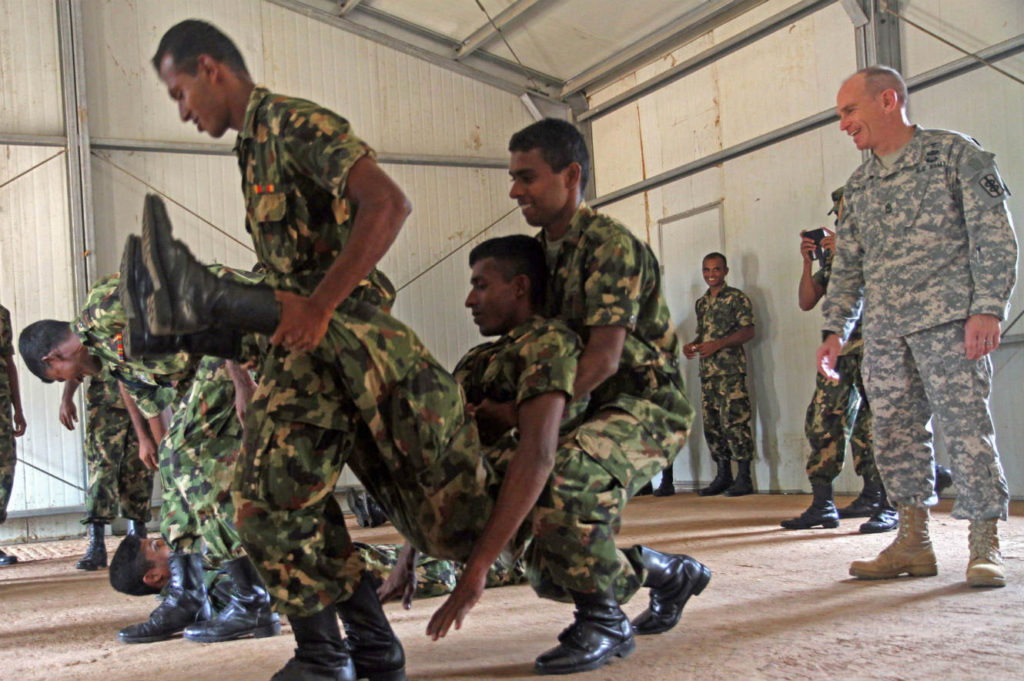
The paper argues that strong US intervention in Sri Lanka after the end of the island’s armed conflict in 2009 is not based on altruistic efforts to protect human rights as presented in mainstream sources, but stems from deepening US geopolitical and ideological interests in the Indian Ocean region. Keywords: Sri Lanka-US relations, US foreign policy, North-South relations, Neoliberal policy, interventionism, Indian Ocean, US-China relations