
Has Democracy Enhanced Development in Africa?
Whether democracy guarantees development and whether development depends on democracy remain hard to answer questions to any looking outside the continent for inspirations. From the East, we find examples of significant development without the blue prints of modern state democracy or liberal democracy while in the west we find significant contribution of the values of democracy to development endeavors. This article discusses this paradox and suggests that for Africa it is imperative to take the two on board.
Human Security and the Problem of Jungle (Mob) Justice in Cameroon
Cameroon is renowned for its relative stability and is often referred to as an island of peace in a continent characterised by a multiplicity of violent conflicts. Of course, one normally would expect such a country to be Africa’s success story in matters of human security. Unfortunately, jungle (mob) justice, which has taken unprecedented heights within the past decade or more, constitutes one of the greatest threats to human security and the rule of law in Cameroon. How then can a country that seems to enjoy such stability have such a dismal human security record? This paper examines the phenomenon and argues that the weakness and failure of the state in ensuring the citizens’ security is largely to blame.
Structural Violence and the International Political Economy
In the contemporary world, the phenomenon we call globalization has brought to life ideas and predictions previously thought impossible. There has been a global diffusion of information technologies and communications, such as the internet, cell phones and satellite television; the facility of international travel; the increased accessibility of consumer goods and services; and the sharing of unique cultures and customs. While on the surface these realizations seem undoubtedly advantageous, they are not without their own serious downsides. Most notable is the fact that as globalization gained influence in the world, largely throughout the 1990s, the actual number of people living in poverty had increased by almost 100 million(1). To make sense of this dark irony, this increasing polarization between haves and have-nots, we must examine the underlying causes and systems driving the distribution of wealth and debt in the twenty-first century. Broadly, such a system might be referred to as the international political economy
Towards Conflict Transformation in Nepal: A Case For UN Mediation
UN peace facilitators could help the Nepalese to draw up a viable compromise, perhaps engaging the parties and the civil society in “constitution making” as itself a part of the process of conflict transformation. They could help overcome the problems of mutual distrust, and ensure transparency and compliance with the code of conduct. UN resident coordinator in Nepal, Matthgew Kahane, has said that UN help could build trust in both sides to facilitate the resumption of the peace negotiations. Unfortunately, the government of Nepal can veto UN mediation because the UN can only intervene if it has the consent of all parties.
Where do ideas come from? An Intellectual History of the United Nations
As lifelong participants and observers of multilateral development work and diplomacy, it struck Dr.Emmerij and his collaborators for some time that the UN story deserves to be better documented if it is to be better understood and appreciated. This article examines the importance of the history of ideas in relation to the United Nations, its formation and its major contribution to world peace and well-being.
Past, Present, and Future of the LGBT Community
This article focuses on issues of Human Rights, Gender, Sustainable Development, and Peace Education, as they relate to the LGBT community.
Realities of Peace and Development: Chaos is Our Lives
In this article, Akiko Abe looks back at her work in peace and development and reflects on the many challenges that we continue to face, both personal and collective. Recalling the characters and stories of a broad range of people living in conflict affected areas, Abe emphasizes the dissonant interplay of dreams and realities, and the need to embrace the chaos of their contradiction in order to continue along mankind’s unfinished journey towards peace.
South Sudan’s Post-Independence Challenges: Greed or Grievance?
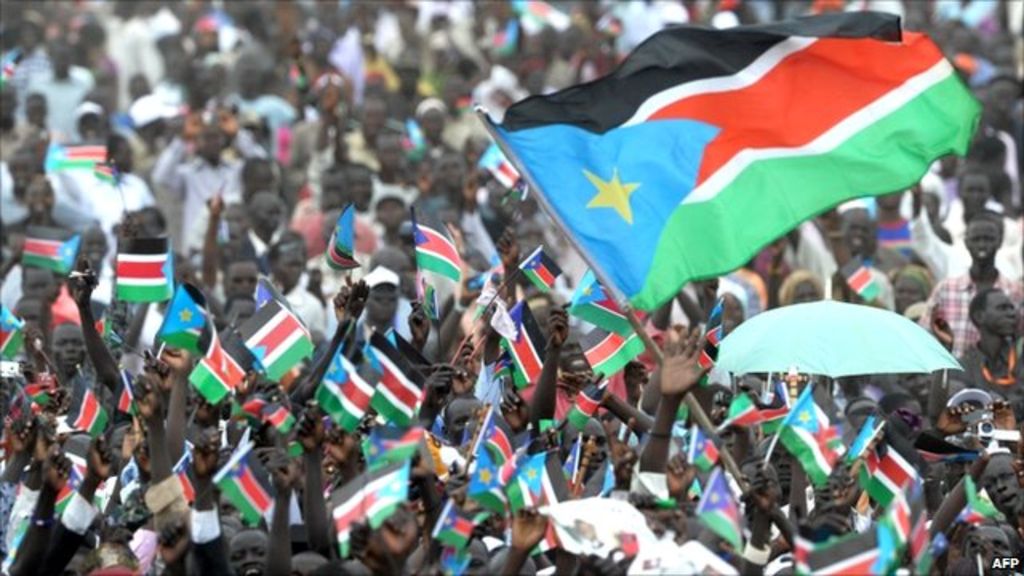
It is now eight months since South Sudan joined the family of nations as a newly independent state. However, as the South Sudanese struggle to find their bearings in a very unpredictable world, compounding challenges seems to be wearing heavily on them. Elizabeth Tesfaye Haile takes stock of how some of these challenges are redefining South Sudan’s dynamics, inquiring as to whether it is greed or grievance at the heart of the simmering tensions.