
Presentación del Centro Global de Innovación para la Paz y del libro “Innovación para la Paz”
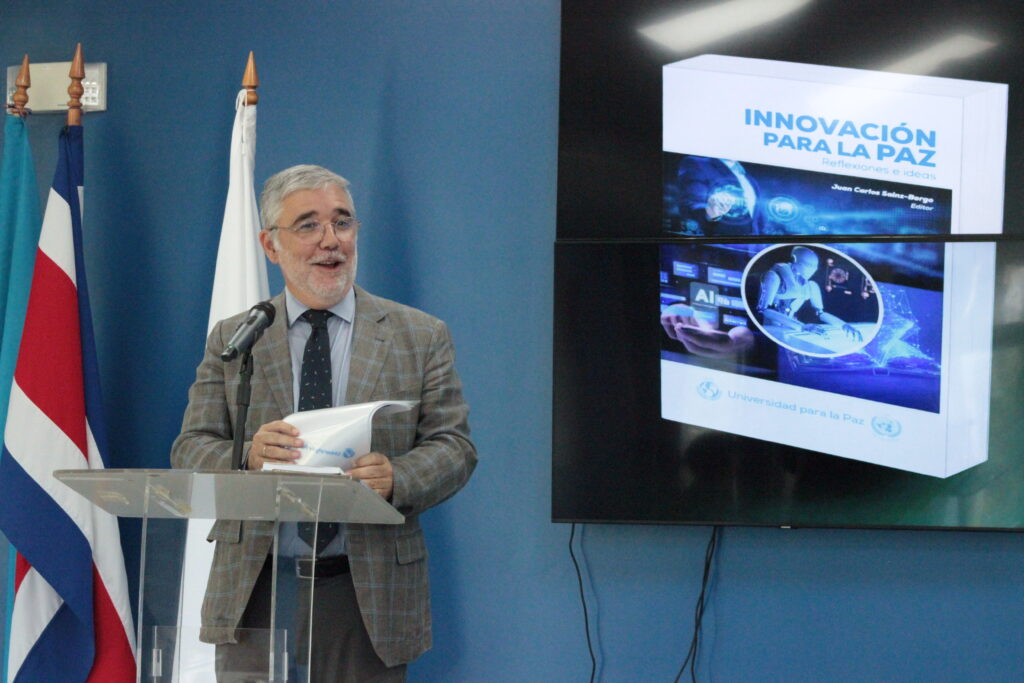
El 1 de abril, la Universidad para la Paz (UPAZ) celebró en su Aula Magna el evento “Innovación para la Paz”, orientado a reflexionar sobre cómo responder a las nuevas realidades en materia de paz mediante la colaboración interdisciplinaria. El Vicerrector, Dr. Juan Carlos Sainz-Borgo, presentó la visión del Centro Global de Innovación para la Paz, creado en 2022 para fomentar un mundo donde paz, innovación y sostenibilidad se sustenten en acción ética y cooperación intercultural. La actividad dio continuidad a los debates que inspiraron el libro Innovación para la Paz. Reflexiones e ideas, presentado en la ONU en 2024, y que en Costa Rica sirvió de base para mesas de discusión sobre áreas prioritarias de innovación (investigación constante, vínculo academia-empresa, capacitación tecnológica y políticas públicas innovadoras), formación de alianzas estratégicas con actores diversos, y exploración de fuentes de financiamiento nacionales e internacionales. Entre los proyectos replicables surgieron laboratorios de innovación tecnológica y programas de microcredenciales. El Rector, Dr. Francisco Rojas Aravena, cerró destacando la importancia de nuevas narrativas para la paz, el arte como medio de expresión pacífica y un desarrollo sostenible centrado en las comunidades.
Prácticas restaurativas: el rol de la Comisión Internacional contra la Impunidad en Guatemala
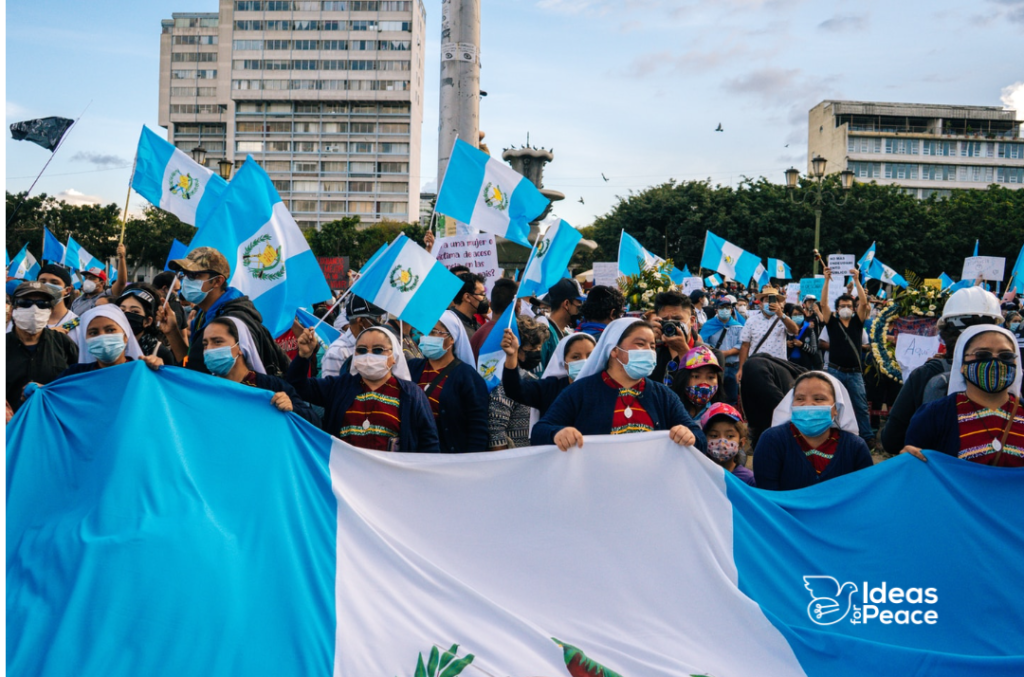
Prácticas restaurativas: el rol de la Comisión Internacional contra la Impunidad en Guatemala (CICIG) Autor: Mauricio Abraham Rosales Schettini Traducido al inglés por Leah Ann Durst-Lee Luego de un Conflicto Armado Interno (CAI) de 36 años (1960-1996) los acuerdos de paz en Guatemala supusieron la llegada de un nuevo capítulo en la reconstrucción de una […]
Interview with Pratyush Sharma
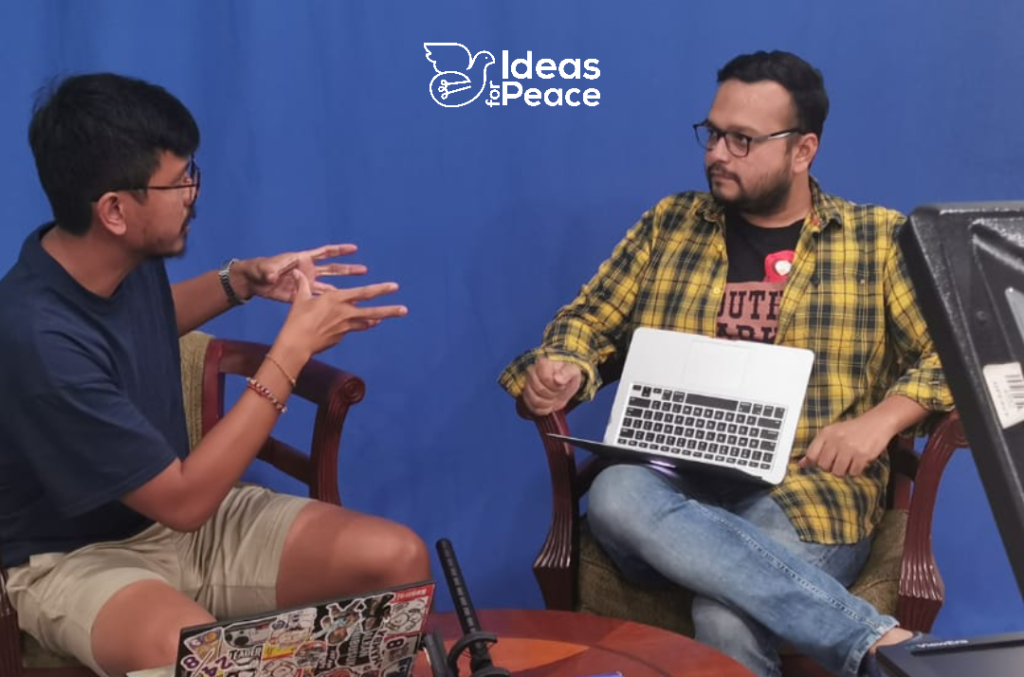
In this episode, Pratyush Sharma, UPEACE’s doctoral candidate, discusses his latest publication about South-South cooperation.
The Role of Regional Integration in Fighting Crime and Terrorism: The Case of the African Union’s (AU’s) Initiatives, 1999-2014
As regional organizations facilitate economic integration, they also find themselves increasingly taking responsibility for security issues as well. This paper outlines the experience of the Africa Union, and the challenges it faces as it emerges as a guarantor of security on the continent.
Water Security in the Sixaola River Basin
The Sixaola River Basin crosses the border between Costa Rica and Panama, and is home to Yorkín and Bribrí communities, raising legal and social challenges for equitable and secure water management. This paper outlines some of these challenges and makes recommendations for reducing human vulnerability to hazards (particularly floods) and for improving relationships among stakeholders.
The United States Supremacy and her place in Global Politics and the Geopolitics of the International System
Following the demise of the cold war in 1990s, the United States emerged as the world’s leading power in the international system. This supremacy is partly supported by the global recognition of United States’ position as the most powerful nation on earth. America’s global supremacy is also anchored on the centrality of its role in global politics and its tremendous influence on the geopolitics of the international system. By referring to the U.S. as the world’s super power, there is an implied relational reference and positioning of the United States as the center piece of the international system. It is perceived as the grandmaster of international affairs. This paper examines the supremacy of the United States in the new world order. It argues that as a post-cold war super power, the U.S. has significant influence on global political and developmental relations that characterize the ideologically unstable and anarchic international system. The paper explores the contradictions that arise from the efforts of the U.S. to pursue common good using its military power in the attempts to restore sanity in the international system. It concludes that by climbing to the apex of the world’s top power seat, the U.S. earned itself the image of an empire builder that is assumed to have imperialistic tendencies rather than a respected overseer of the international system.
International Cooperation to Control the Intergovernmental Small Arms Trade: Case Study China-Sudan
After outlining the deadly scope of today’s small arms trade, this paper touches on questions of international law and responsibility, or lack thereof, as illustrated by the legal intergovernmental transfer of arms from China to the Sudan, despite international pressure urging the contrary. References include United Nations documents, task force and international NGO campaign reports, contemporary media coverage and University for Peace lecture discussions.
Deconstructing Reconstruction
David Ekbladh unravels the real meaning of “post-war reconstruction”.
Cuban-European NGO Collaboration: The ‘Special Period’
The purpose of this article is to achieve an understanding of the nature of nongovernmental organisations (NGOs) in Cuba and to highlight aspects of the collaboration that has occurred between Cuban and European NGOs. The motivation for undertaking this study is to begin the process of filling the gap in information with respect to Cuba’s NGO community and to get a sense of the circumstances under which international cooperation is carried out on the island. This article constitutes the preliminary findings of an interdisciplinary study of the role of NGOs operating within the context of a revolutionary socialist society. The article begins with essential background to understanding the reasons European NGOs entered Cuba in the 1990s
Regional Integration and Peace
Visiting University for Peace professor Philippe De Lombaerde gives an overview of regional economic theory and its causal relationship to regional security.