
The role of cultural diversity in conflict resolution in Africa
In Africa, interstate and intrastate wars have hindered economic development and political stability, causing poverty and failures in nation building. The ongoing challenges of European colonial history and ethnic division continue to fuel these conflicts. In contrary to conventional views on the cause of the conflict in Africa, however, this paper defines cultural diversity as distinct concept from ethnic diversity, and argues that cultural diversity is in fact a viable instrument of conflict resolution in Africa. Finally, it proposes peace education as a key to promoting cultural diversity for peace building in Africa.
Conflict Analysis and Resolution: Socio-cultural and Intrapersonal Perspectives
Much of the literature on peace building and conflict transformation focuses on socio-economic analyses, while relatively little research addresses the psychological causes and impacts of violence and insecurity. This paper seeks to refine existing models of conflict analysis through the explicit inclusion of psychological and cultural perspectives in order to better identify the core interests of parties to conflict, and to understand the mechanisms through which conflicts are produced, protracted, and, ultimately, resolved.
Indigenous Conflict Resolution and Durable Peace in Cyprus
Cyprus remains deeply divided, despite (or perhaps because of) years of legalistic and nationalistic attempts to resolve the conflict. In this essay, researcher Oluwaseun Bamidele argues that greater emphasis should be put on “indigenous” models of negotiation and reconciliation, common to both Greek and Turkish Cypriots, as well as to a “politics of feelings”, in order to breakdown divisive narratives of historic trauma and strengthen the emerging culture of empathy and peace on the island.
US influence in El Salvador’s civil war
US influence in El Salvador’s civil war Author: Oscar Alvarado Originally Published at Peace and Conflict Monitor on 03/06/2009 In El Salvador the rich and powerful have systematically defrauded the poor and denied eighty percent of the people any voice in the affairs of their country. A revolution is now underway and we are one […]
Challenges to Disarmament, Demobilization and Reintegration: The Case of the Niger Delta
It is my contention that, desirable as it is to conduct a DDR programme in the region, there are certain critical preconditions that have to be met for it to be successful. Analysing these preconditions was the main focus of this paper and contribution to the proposed DDR in the Niger Delta region of Nigeria.
But it will take more than disarmament, commitment and drawn out negotiations to obtain peace in the Niger Delta.
Not only are stakeholders faced with a history of corruption and bad governance, poverty and youth unemployment, but also and arguably the biggest challenge of the future: trust. Solomon Inuwa analyses, with first hand experience, the core needs to be met before embarking on the first steps towards peace.
Trauma-Sensitive Peace-Building: Lessons for Theory and Practice
Over the past several decades, peace-building and trauma studies have emerged as interdisciplinary fields that seek to better understand their respective social phenomena and develop appropriate responses. Practitioners of peace-building often work in severely conflicted settings with groups that have been exposed to traumatic events, while a number of trauma professionals interact with individuals and groups from conflicted regions. Despite increased cooperation based on the work of scholars and practitioners who have begun to explore the intersection between peace-building and trauma, significant challenges remain, particularly concerning how peacebuilders can make their work more trauma sensitive. This article provides a brief overview of the fields of trauma studies and peace-building, highlights connections between the two areas, reviews recent literature, and discusses the concept of trauma-sensitive peace-building and several challenges of conducting practice in this area.
This article is extracted from Zelizer, C. (2008) Trauma-Sensitive Peace-Building: Lessons for Theory and Practice. Africa Peace and Conflict Journal 1 (1), p. 81-94.
To access the full journal, please contact editor@acpj.upeace.org
Mediators Beyond Borders: Pathways to Peace and Reconciliation
In this timely article, Kenneth Cloke reflects on the potential of mediation to inspire conflict transformation and social development in times of interpersonal as well as international crisis.
Technical aspects of mediation are also discussed, as Cloke draws from his considerable experience in the field, offering practical and accessible advice for the promotion of cooperation and coexistence in our own lives and beyond all borders.
Peace Journalism: A Needed, Desirable and Practicable Reform
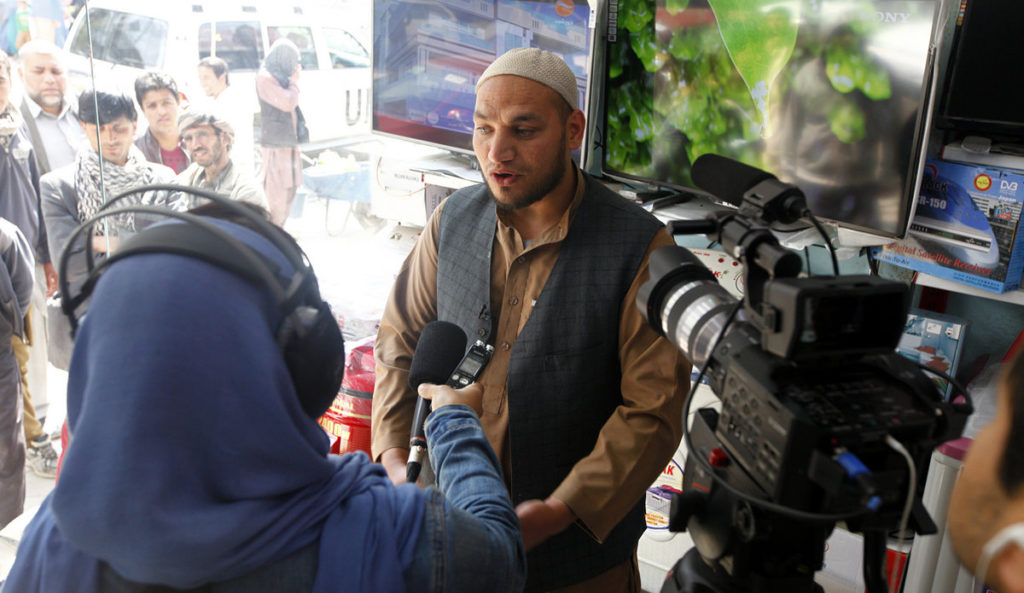
The idea of peace journalism has attracted its share of critiques and controversies, but as Vanessa Bassil argues, it still offers a much needed and practical, peace-oriented perspective from which media can be analysed and produced.