
Why Donald Trump’s Refusal to Concede Undermines Democracy in Africa?
The refusal of Donald Trump to concede defeat to President-elected, Joe Biden undermines democracy and legitimizes dictatorship in Africa
The Rhino Wars and Alternatives in South Africa
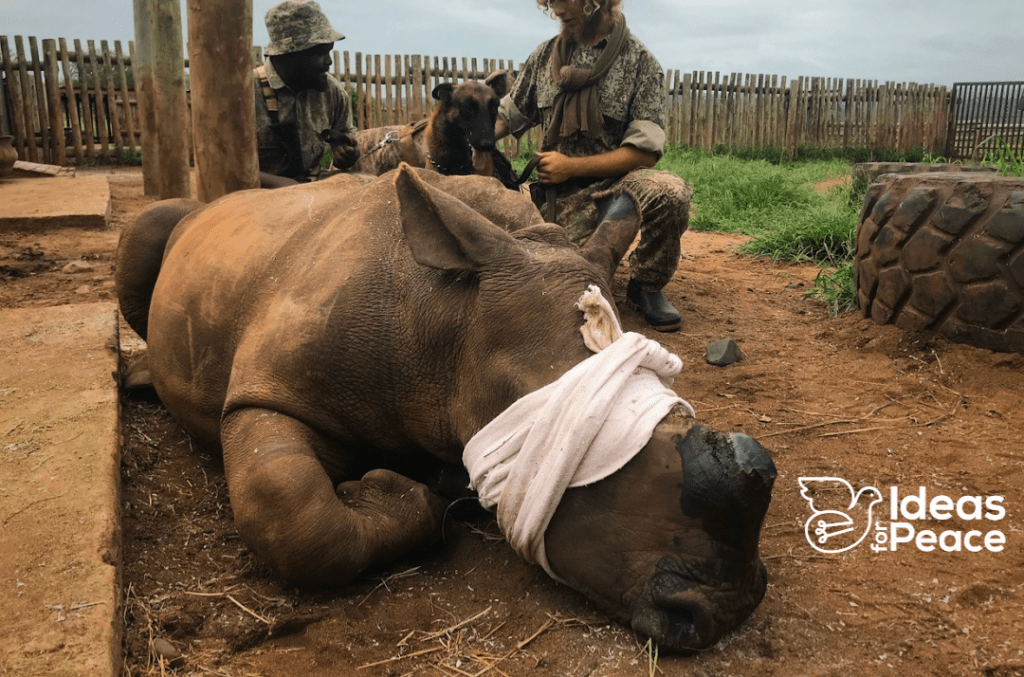
A conflict-analysis perspective of the dehorning process as a protection mechanism of rihnos in South Africa
Safety Case Regulatory Approach in Health and Safety Standards in Uganda

Analysis of the Safety Case Regulatory Approach in Safeguarding Health and Safety Standards in Oil and Gas Sector in Uganda Author: Peter Reat Gatkuoth Introduction According to Lassourd, T. in his working-paper, “Fiscal Rule Options for Petroleum Revenue Management in Uganda’’ Strategies have been set in order to prepare the country for commercial production of […]
Ending impunity and seeking reconciliation in the Central African Republic: Role of Transitional Justice

The Central African Republic (CAR) has been suffering from long-lasting conflicts and is now required to establish the rule of law through Transitional Justice. Transitional justice is for the recovery of countries devastated by conflict. The United Nations describes Transitional Justice as ‘the full range of processes and mechanisms associated with a society’s attempt to come to terms with a legacy of large-scale past abuses.’ (United Nations General Assembly Human Rights Council, 2014) and it includes judicial and non-judicial mechanisms, such as the prosecution of perpetrators through national, international or a hybrid justice system, and the Truth and Reconciliation Commission. Then, what kind of efforts have been made to establish transitional justice in the CAR? Which system works well in the context of CAR’s complex conflicts?
Non-Governmental Organizations, The Two-Edged Sword for Peace and Development: The Case of Karamoja Region

Non-Governmental Organizations, The Two-Edged Sword for Peace and Development: The Case of Karamoja Region Author: Wyclife Ong’eta, and Salome Nyambura Translated into Spanish by Sylvia Cespedes Introduction Over the past 100 years relatively more NGOs have tended to operate in fields that are also of great concern to national governments, for example, economics, finance, commerce, peace, […]
Transitional justice for Mali: The impasse?
Transitional justice for Mali: The impasse? Author: Odette Pires Translated into Spanish by Florencia Prieto For eight years now, Mali has been a scene of a series of armed conflicts involving multiple local, regional, and international actors that are getting more and more entangled in a dead end. Important stakeholders such as France, the United-States, […]
Diary from Burundi
The author reflects on the recent peace process in Burundi and its shortcomings and calls for an international criminal tribunal.
Conflict and resolution in Rwanda
Alphonse Nshimiyimana describes his work in his home country of Rwanda at the Center for Conflict Management funded largely by UNDP and where, understandably, there is much to be done.
Fortress Europe: Ceuta and Melilla
In September the world watched a dramatic spectacle unfolding as thousands of would-be immigrants from all over Africa charged barbed wire fences surrounding the Spanish enclaves of Ceuta and Melilla in a desperate attempt to enter Europe. In several incidents some immigrants were shot dead. In another, they were rounded up, put in trucks, and shipped off and left in the desert with no food, water, or shelter. These events highlight the growing need for the European Union to not only confront the issue of immigrant human rights, but make it a priority.
Global Witness
Joe Schumacher is in conversation with Erin Wakes and Gavin Heyman of Global Witness, a London and New York based NGO concerned with the ethical use of natural resources, particularly in the extractive industries. Much of their work focuses on highlighting corruption and promoting transparency in accounting practises.
Much of the discussion reveals a success story: the Extractive Industries Transparency Initiative. For the work of Global Witness see http://www.globalwitness.org/