
UN Women in Taliban Afghanistan
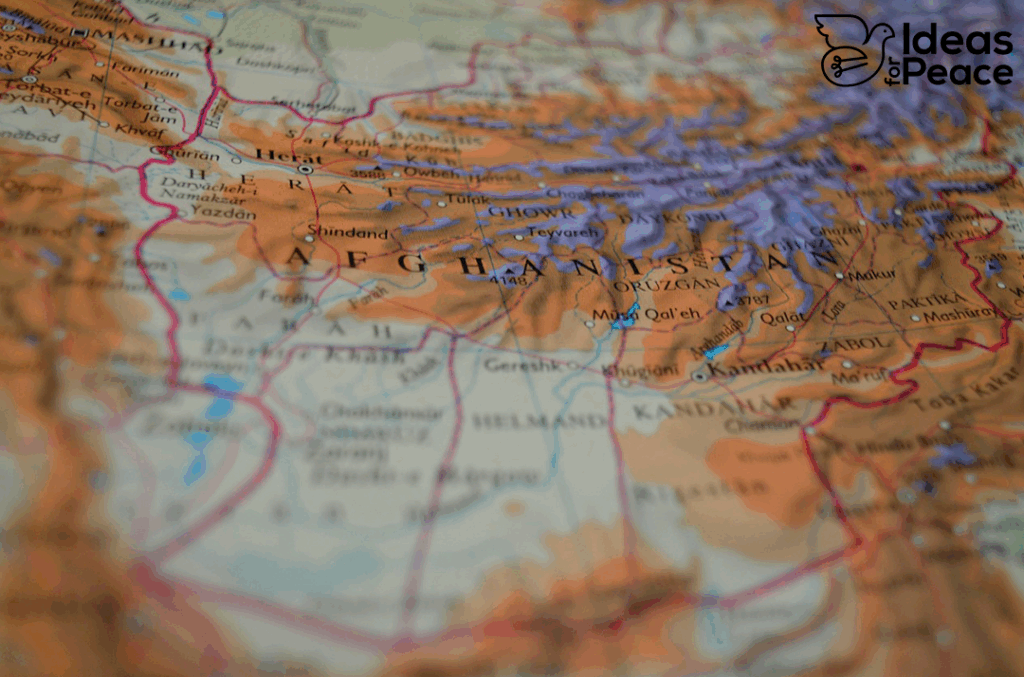
UN Women in Taliban Afghanistan: The Limits of International Advocacy Without State Cooperation Author: Rebecca Arnieri The United Nations has long framed gender equality as both a fundamental human right and a prerequisite for sustainable development. At the centre of this agenda is UN Women, created in 2010 to unify and strengthen the UN’s work […]
Ready to Vote
On the ground in Afghanistan, pre-election tension and hope.
Democracy and Governance in Afghanistan
Lack of security, slow progress in the disarmament of militias, and a weakly developed legal and institutional framework for democratic politics are endangering the success of Afghanistan’s presidential and parliamentary elections due to be held in September.
Shifting Sands: Instability in Undefined Asia
Shifting Sands: Instability in Undefined Asia Author: Strategic Foresight Group Originally Published at Peace and Conflict Monitor on: 04/28/2003 Category: Special Report There are periods in history when the world changes. The Second World War from 1939 to 1945, and the end of Cold War and apartheid from 1989 to 1992 were the last two […]
Article 2(4) of the UN Charter: Alive and Well
Some have argued that the continued use of force in international relations demonstrates that the prohibition of the use of force in Article 2(4) of the UN Charter is meaningless and outdated. Kanade counters this position with a discourse on the purpose and interpretation of international law, and argues that the UN Charter continues to offer a meaninful and effctive legal framework for confronting threats to global peace and security.
Is Peace through Nonviolence Possible in AfPak?
Jahan Zeb comments on the enduring contribution of historical figure Bacha Khan to transforming conflict through nonviolence in Afghanistan, Pakistan and India.
Humiliation and Crocodile Tears
Dr Victoria Fontan reflects on the role of honor and humiliation motivating insurgents in both Iraq and Afghanistan — as well as the Afghan soldier who recently killed four French soldiers participating in the NATO mission in the country.
Peace in the 21st Century: Prospects and Prescriptions
It is increasingly recognized that if civilized society is to contain and defeat international terrorism, we must confront the threat in two related and mutually reinforcing ways. We must maintain adequate levels of military security and take strong, direct action, including military action where necessary, to confront and eradicate terrorism. This is the principal focus of international deliberation and action at the present time. But this is not enough. We must also, through international and national action, and through the efforts of civil society, work together to address the underlying injustices, frustrations and failures that give rise to the hatred and intolerance which drive violence, terrorism and conflict and provide the environment in which they can fester.
And You thought the War On Terror was over? Not for François Hollande…
Victoria Fontan and Adolphe Kilomba discuss the context and motivations behind France’s intervention in Mali, as well as some of the legal arguments used to justify it.
Even In Afghanistan, Separate Is Not Equal
Are US/NATO efforts to empower women and equalize Afghan society undercut by the segregation policies of their own camps and insensitivity to local staff? Jade Wu reports from Kabul and Kunduz.